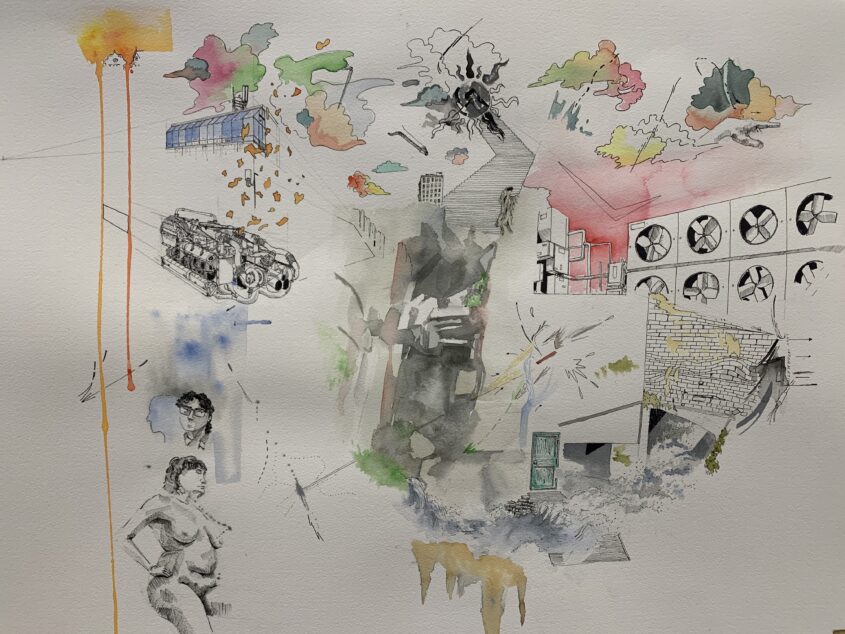
The illustrations of folktales and picture books were a regular feature of my childhood. They are nostalgic to me because they communicate a time in my life which was as pleasant as it was mythic. Back then, certain truths seemed self-evident, and many aspects of the world had “clear borders and values” as Svetlana Boym (2007) frames one factor of nostalgic longing (p. 12). I think this is a feeling shared by many people. Many different practices of art are nostalgic because they are widespread and readable, even by younger audiences. Artists such as Jazz musician Pat Martino have even suggested that art is a language in itself because of its communicative capacity (Kraut, 2005). Afterall, the kind of art you find in picture books is often nostalgic to so many people because it can establish a language which conveys lessons or creates dialogue through its enjoyment. As Boym says, another factor of nostalgia is that its fantasies of the past are also determined by the needs of the present, and can impact the direction of our future. Perhaps my childhood is also nostalgic because it represents a world open to exploration, within which each picture book offered new directions forward. Still today, my artwork draws heavily on the practices of illustration and its associated media that I grew up around. I also want to ask people to look closely with wonder.
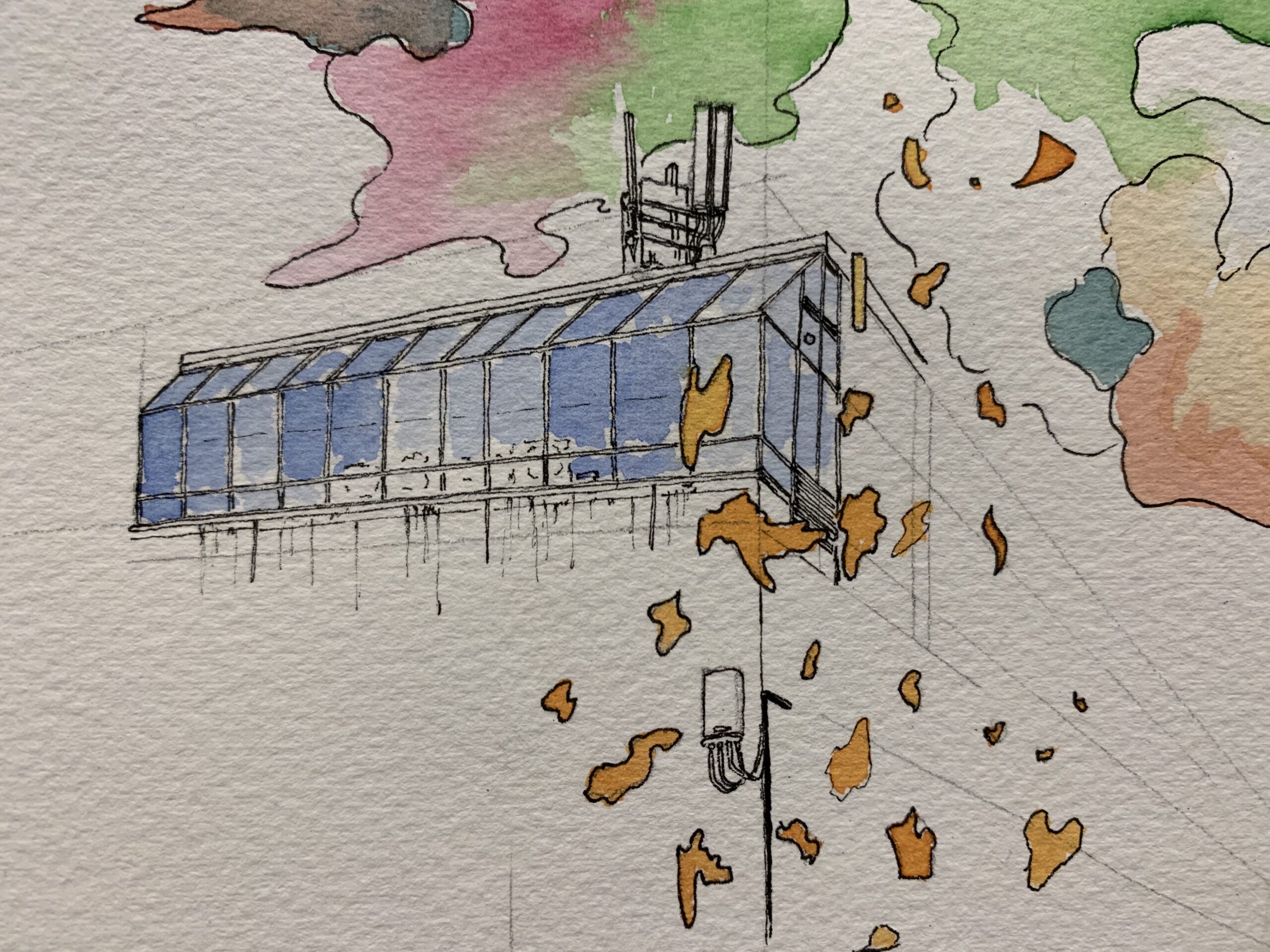
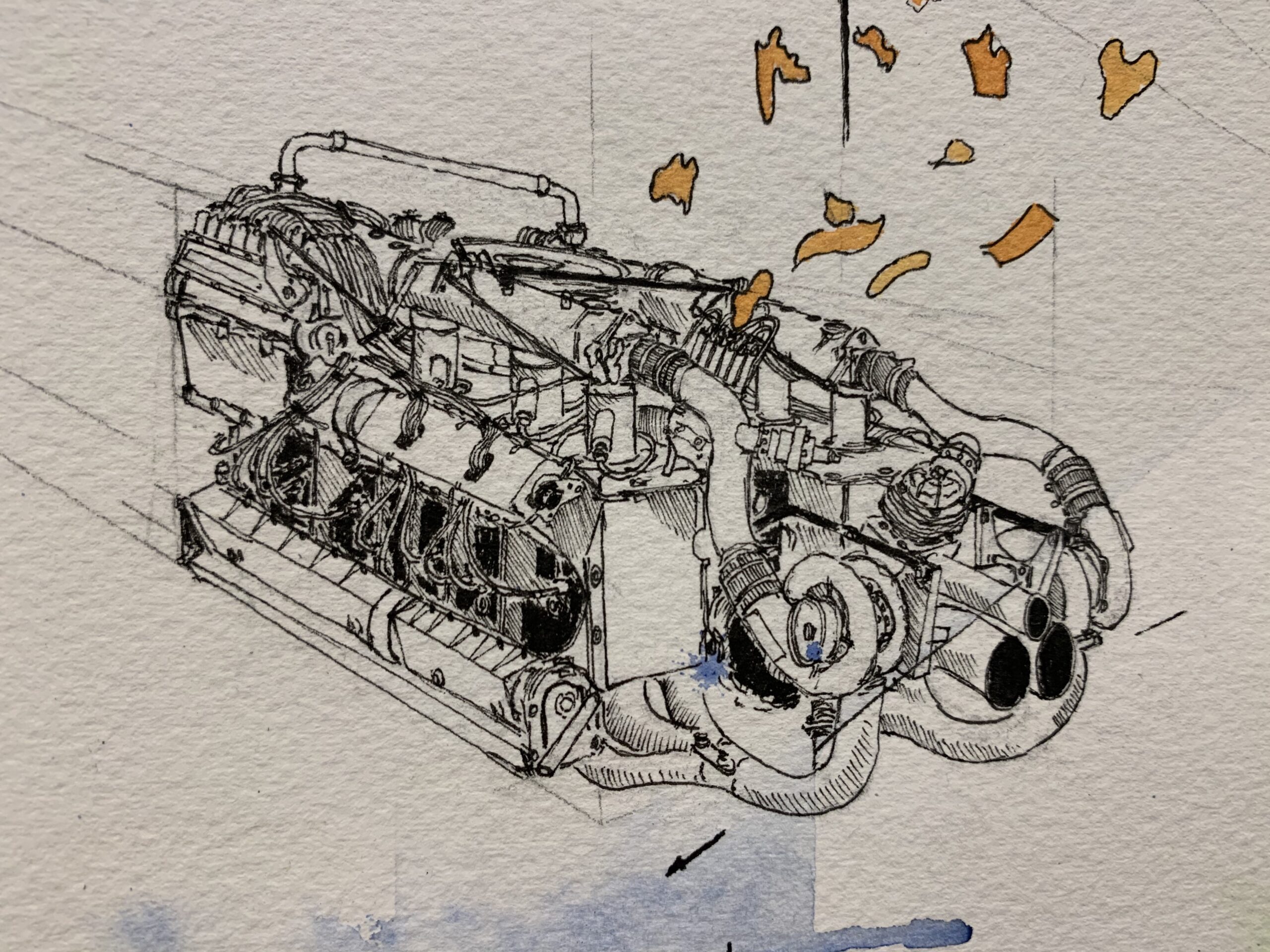
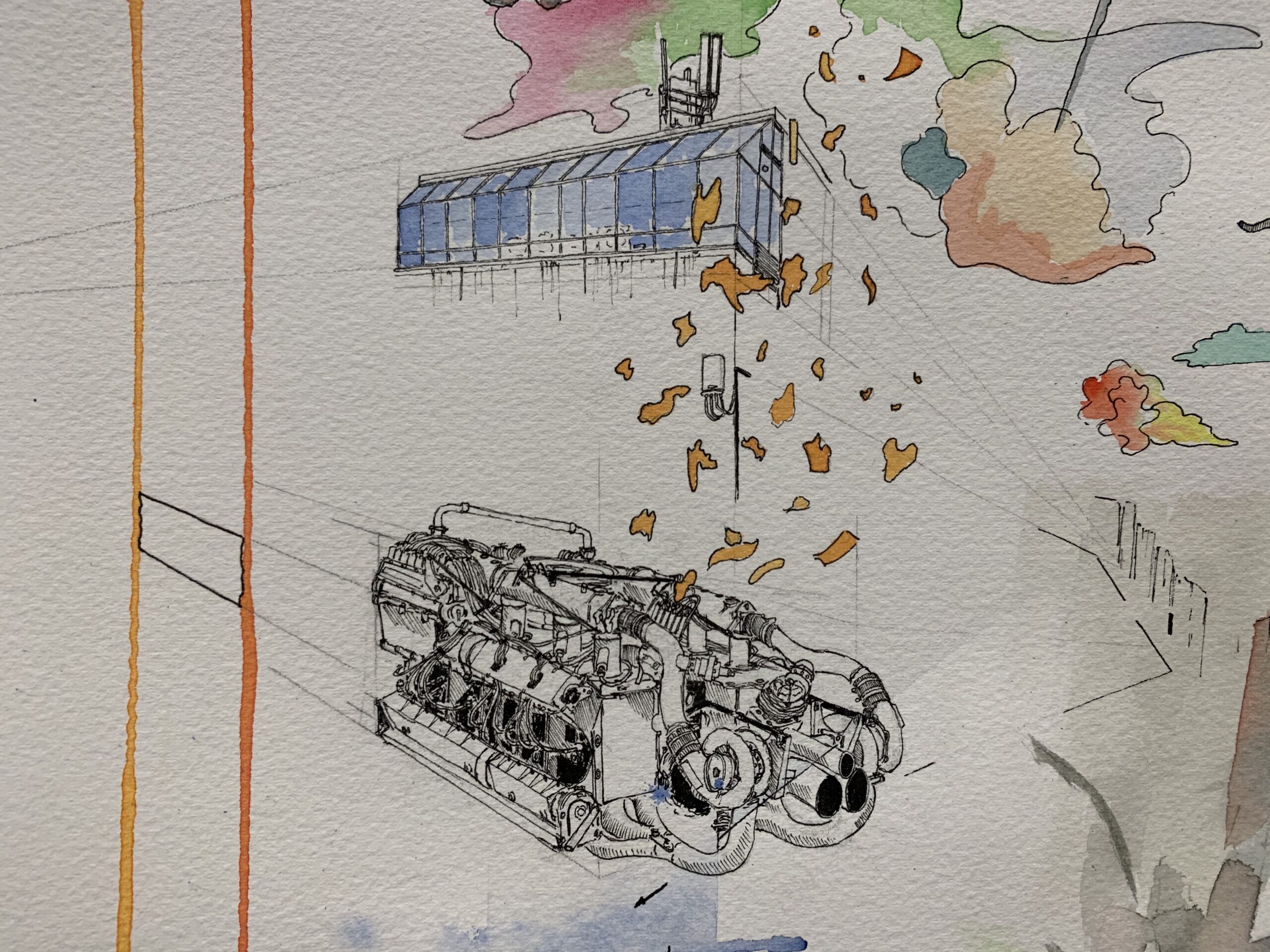
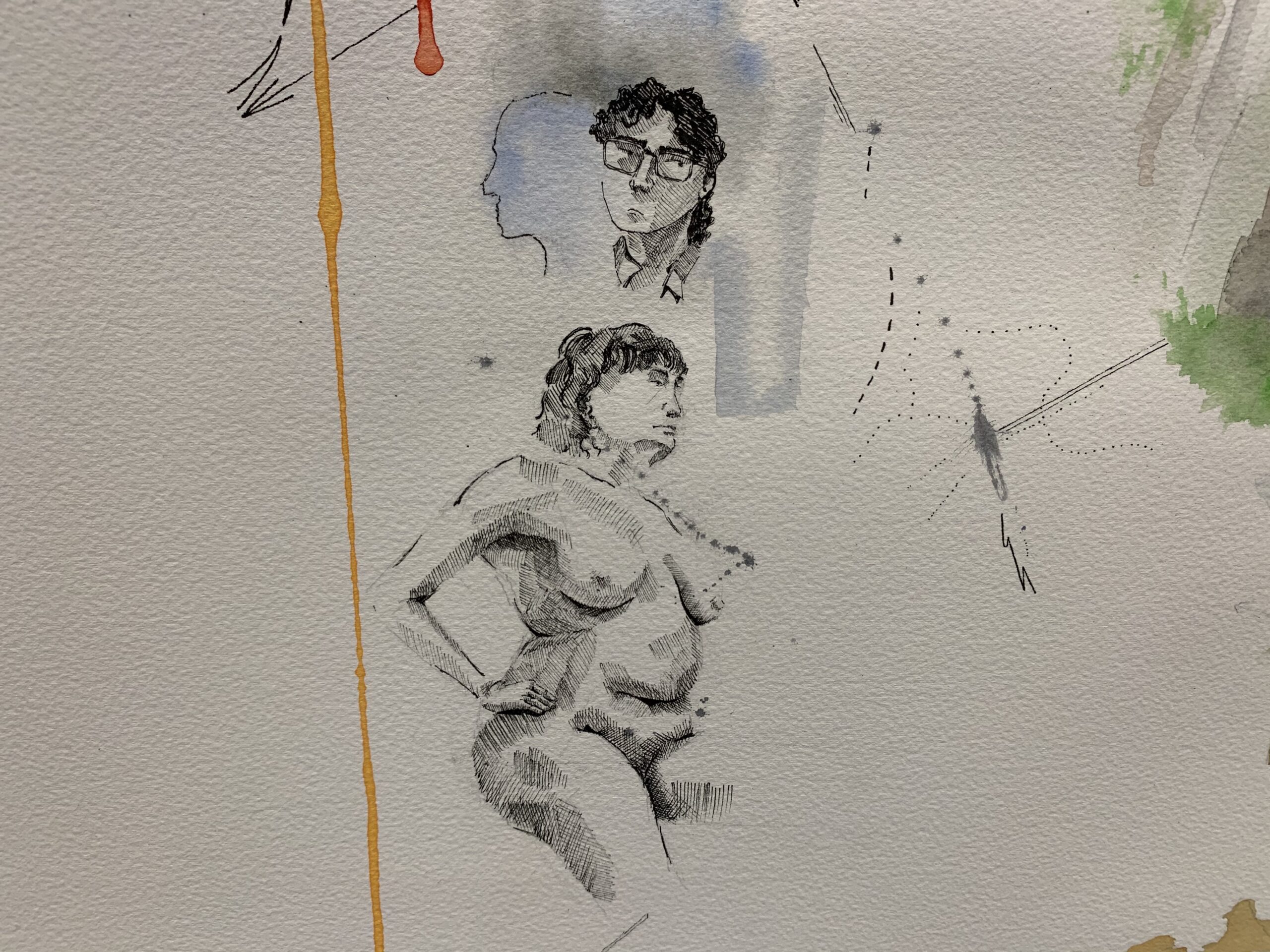
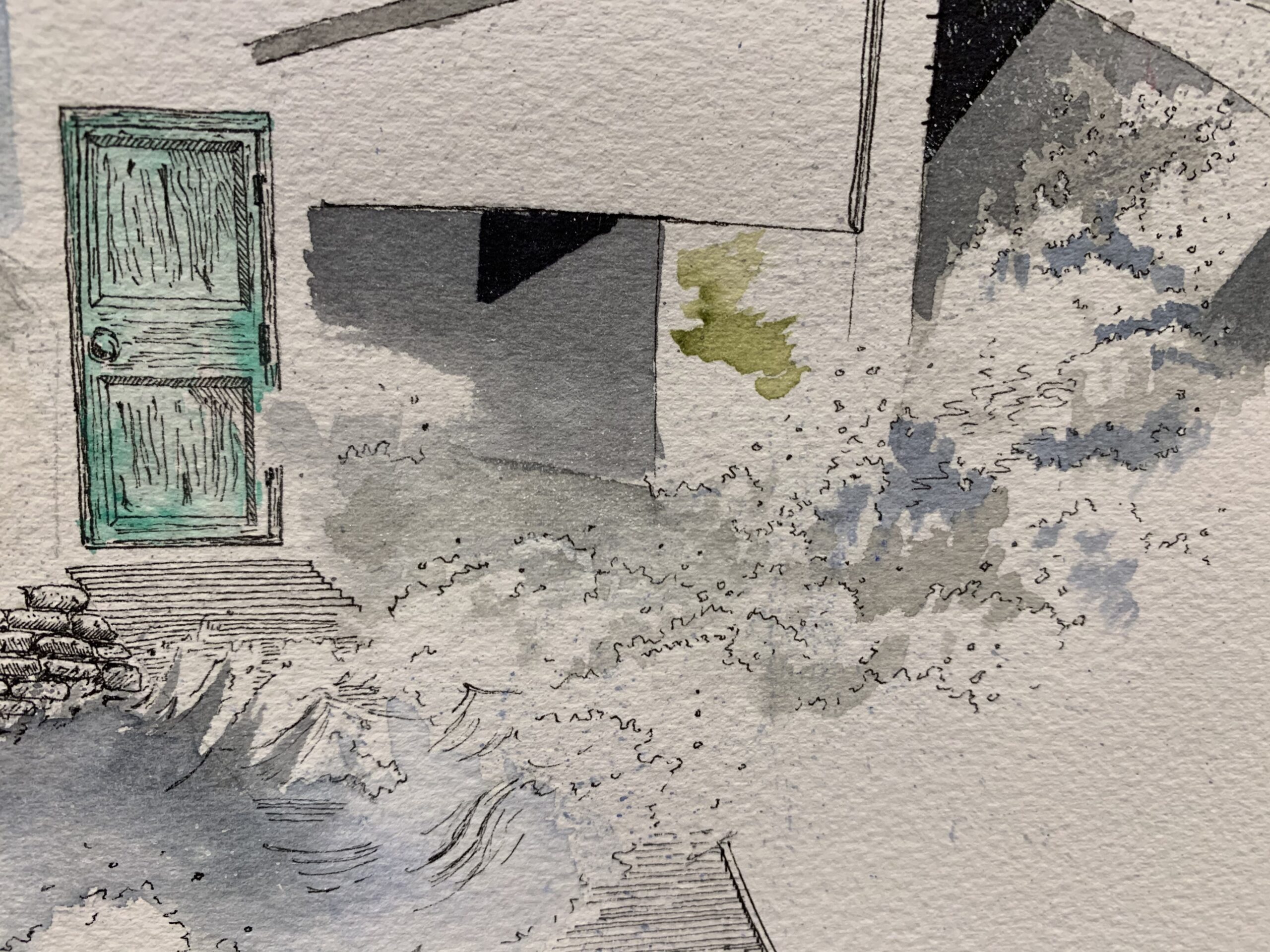
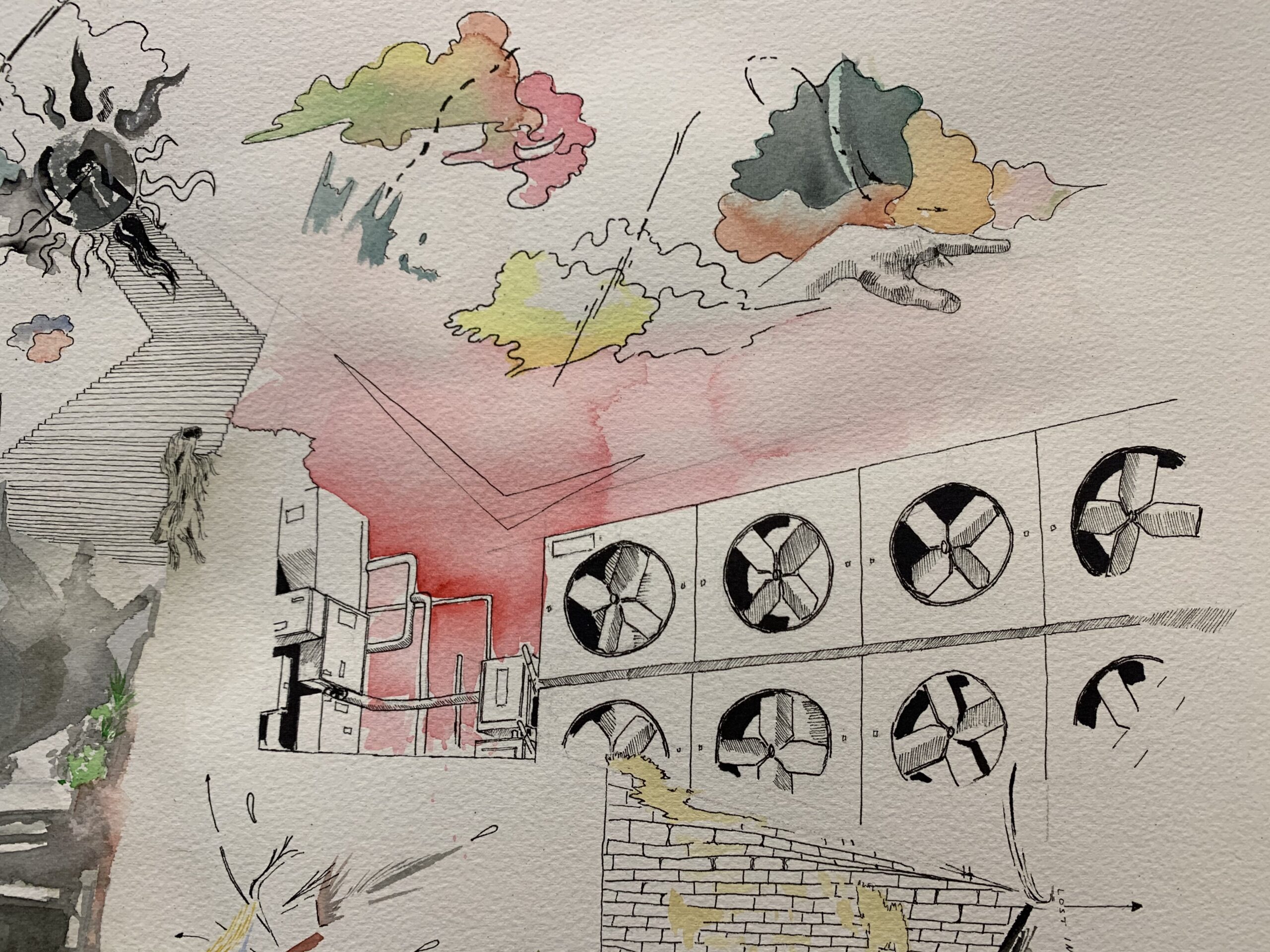
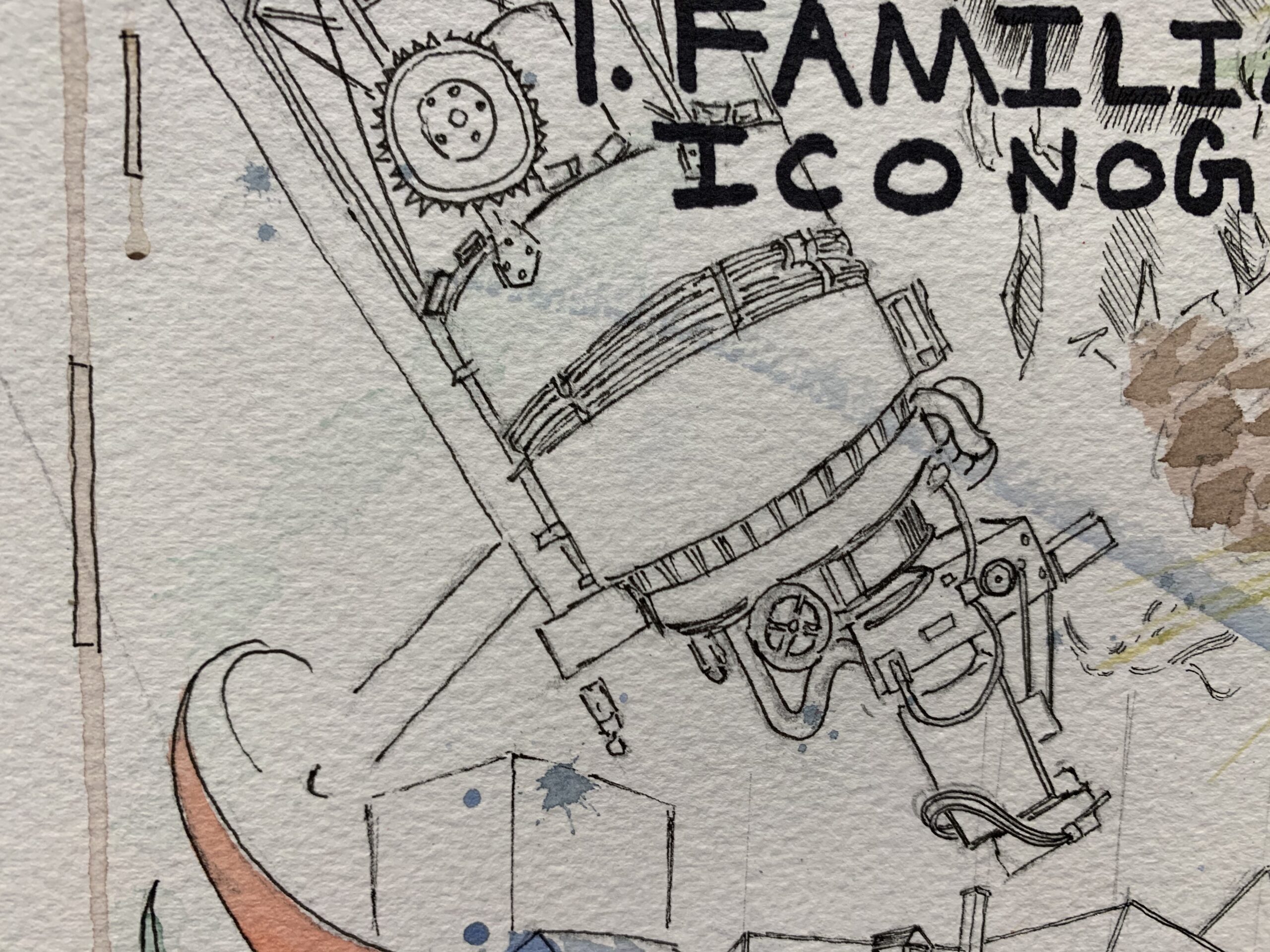
There is a necessity for nostalgia to have a practical language. However, there is no inherent requirement to understand art –in a general sense of the word– in a way that allows for structured participation, something that Robert Kraut (2005) points out contradicts ideas of art as purely linguistic. Instead, the specific kinds of art that have nostalgic value are left to establish a consistent appearance to achieve their practicality. Practices of illustration in particular are often nostalgic as they are accessible means of storytelling which communicate in conjunction with language, and within particular cultures; with all helping to form the visual narrative. For me, the same can be said of architectural and mechanical illustrations, which I grew up around, and so hold a close proximity to my heart. As much as I fantasize about paging through illustrated guides and story books in years past, these can also serve to provide imagery and technique in directing my work.
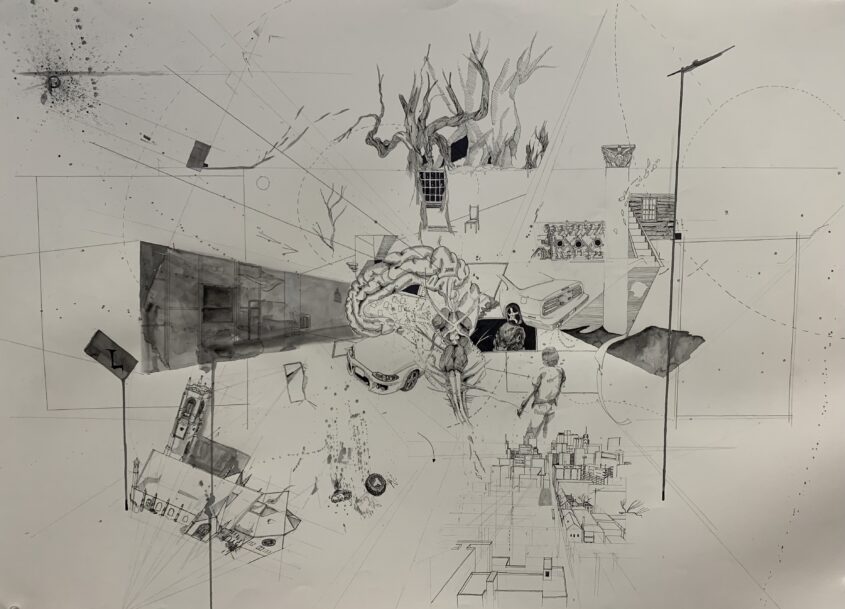
However, relying on the language of nostalgia alone as a means of communication risks ignorance. This is because the solutions it longs for are often steadfast. For example, the themes and stylistic choices of the illustrations we grow up around can be misconstrued as the true standard of how all other art should look and be significant, especially because of their consistency. But, as Walter Benjamin suggested, this is true of any knowledge, which can act both as a solution, but can also sacrifice mystery (Lewis, 2020). This is because any solution might accidently lull us into a sense of compliant expertise. The language of logic can equally become a form of fantasy when it is viewed as providing self-contained information. For example, in illustration, practices such as linear perspective, used to be understood as a pursuit of realism, both to me personally and by many others throughout history. This is because they provided a logical means of representing what we could observe in the three-dimensional world, on the two-dimensional page. However, practices such as linear perspective are metaphorical at best. They provide an object for the viewer to seek out meaning in, that only references another first-hand experience which it is inevitably distinct from. Hito Steyerl (2011) says linear perspective requires us to set aside certain realities of experience in favor of logically approachable ones. The first often being an ignorance towards the Earth’s curvature in favor of a completely flat horizon line. Steyerl also highlights that linear perspective requires an unchanging and immobile spectator. Illustration being bound up in the language of logic has also resulted in fantasy when viewed as absolute. Both languages of nostalgia and logic may seem to present meaning that is innate to their symbols, while in reality the meanings they offer are also subject to exterior ideologies.
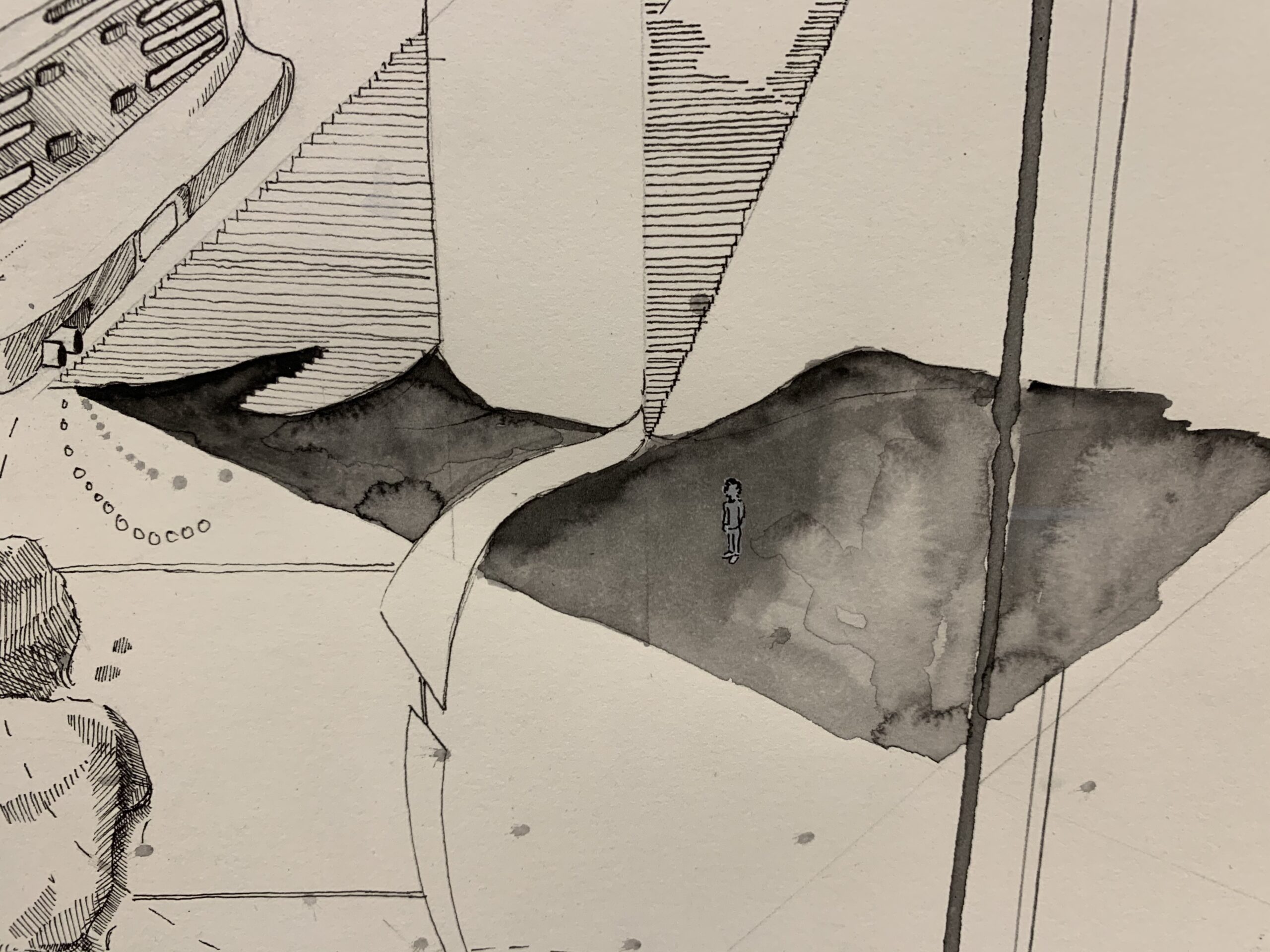
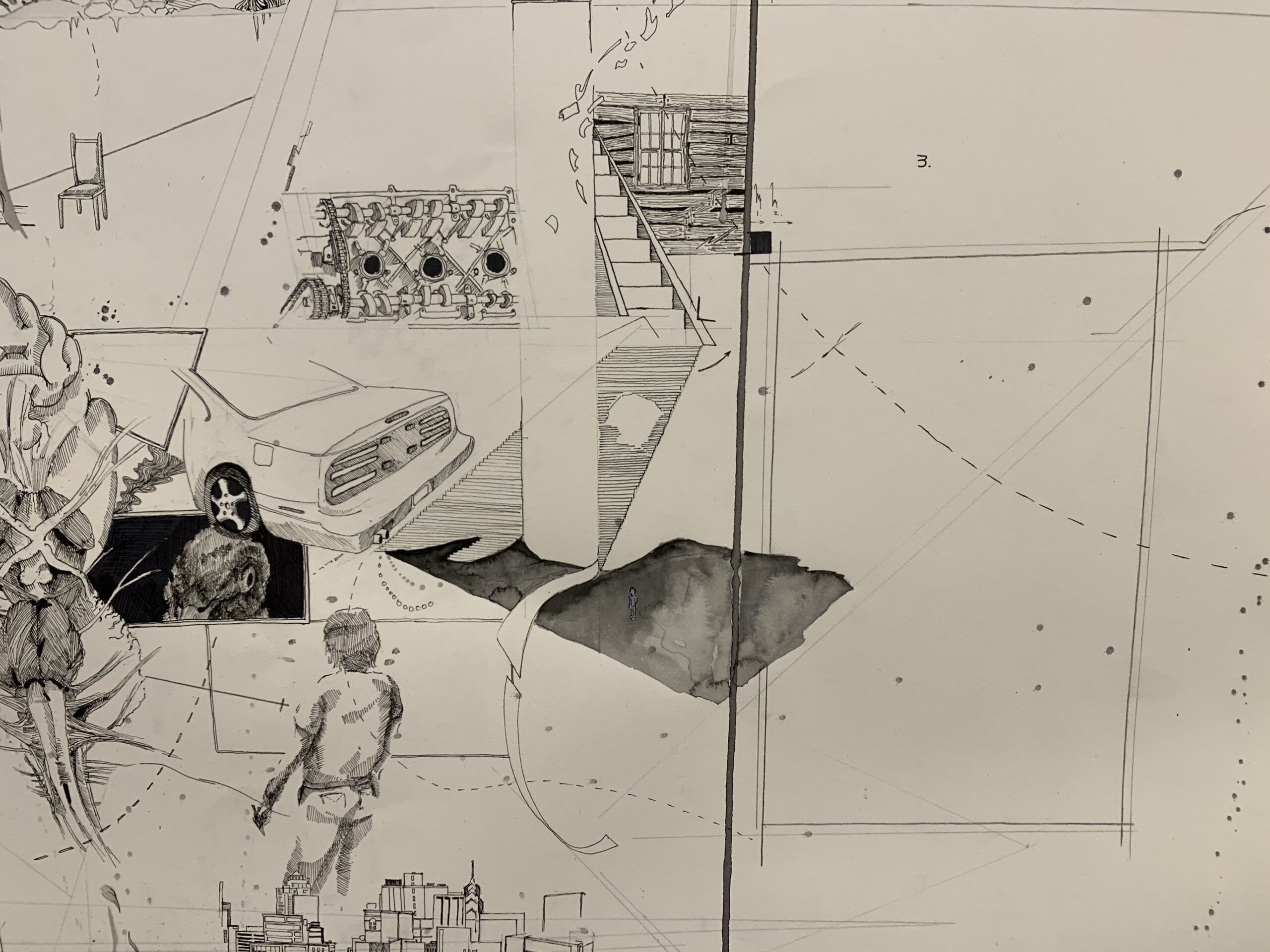
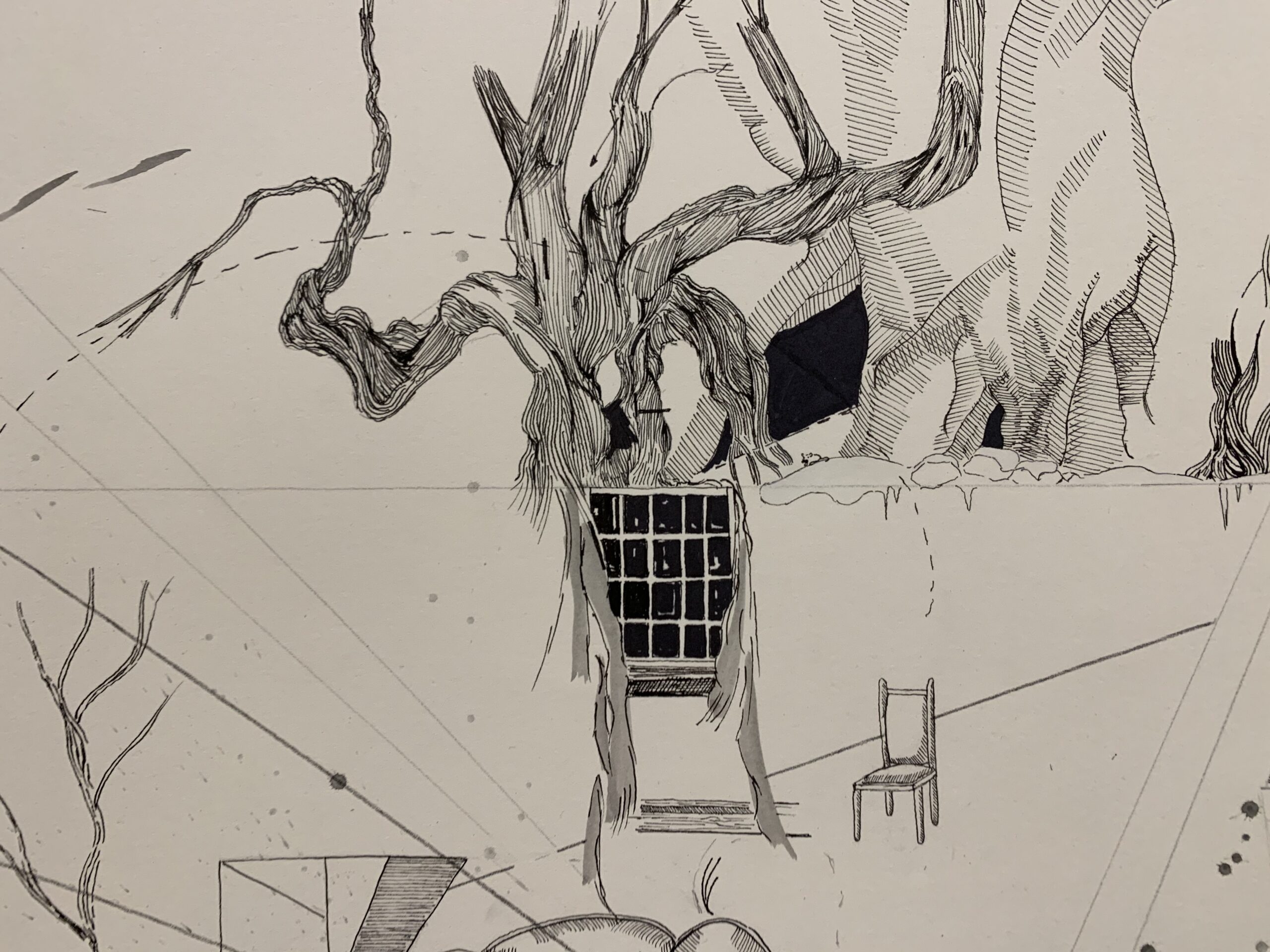
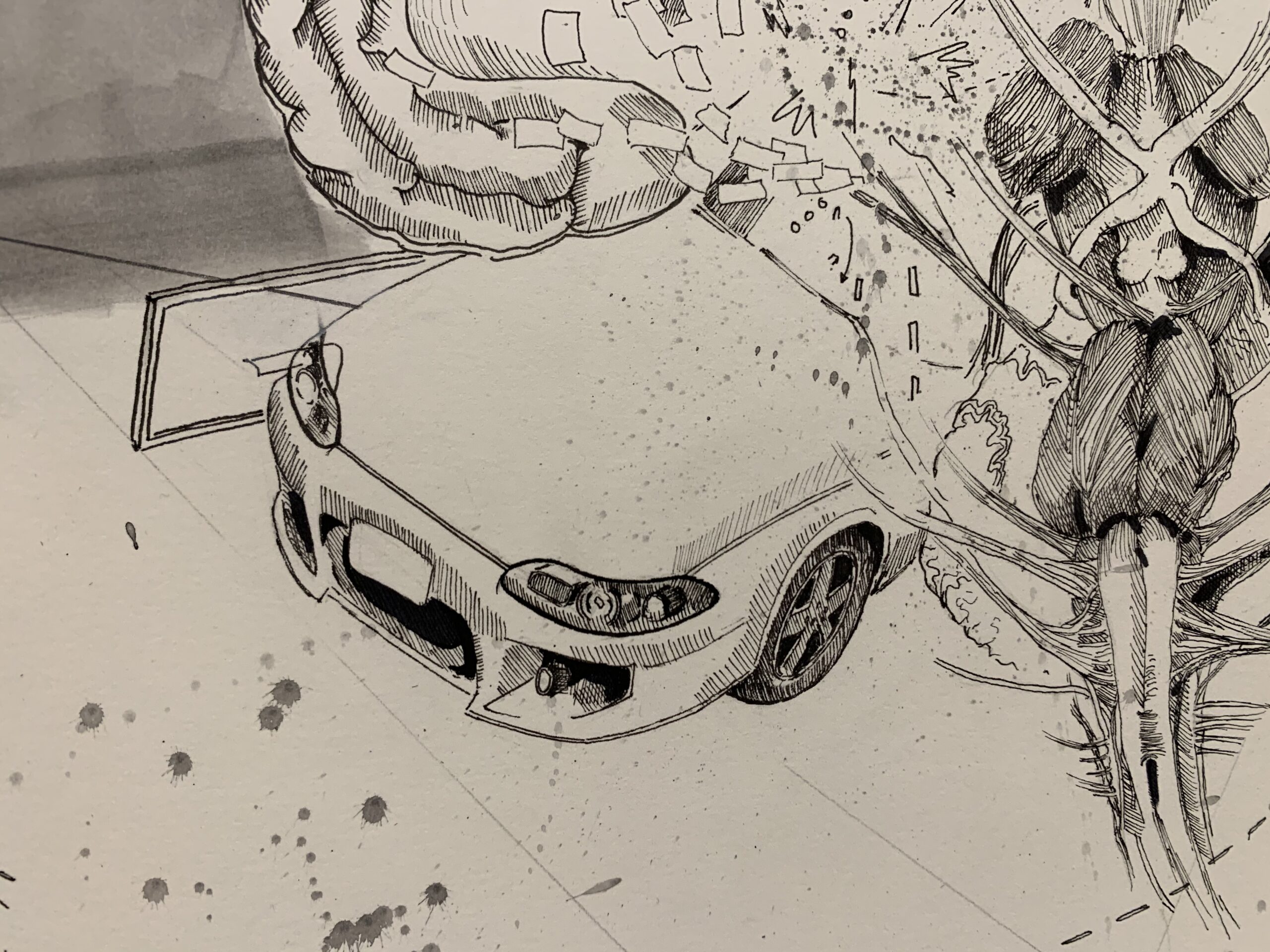
This danger is not innately advertised by nostalgia or logic when they exist as a means of communication. Tyson Lewis (2020) argues that riddles are one way of making visible the secrets of these languages, allowing for their use beyond their intended functionality. Lewis writes of Benjamin, whose interests in riddles rested in their capacity to make visible the separation between the signifier (how an object appears) and the signified (what an object means), by opening up language to new possibilities. In other words, riddles offer a way to reveal exterior influence in the notions presented by nostalgia and logic, and allow for alternative meanings to be found in their associated objects. For example, Lewis (2020) points to a riddle in Karl Marx’s Capital, Volume One: “Name a sensuous thing that is at the same time suprasensible?” The answer is commodity, which has both a sensuous functional value and a fabricated concrete value of exchange (p. 182). Marx illustrates that riddles offer a way to disrupt the natural mode of experience in regard to languages of nostalgia or logic that might be both solution and fantasy.
Various ideologies attempt to frame communicative objects as having a set use-value –or true significance– to serve their efforts. This is also not inherently good or bad; instead, attempts to provide solutions fitting of the issues at hand for their advocates. However, practices such as art can become limited when the distinction between signifier and signified is not made. For example, art is constrained and frequently has its legitimacy questioned because of its capital prospects. For instance, it is often referenced when criticizing art that it is frequently used for tax breaks in the United States. As of 2015, if a collector were to sell a work worth millions of dollars they would have normally had to pay around 28% in capital gains taxes for the art to the government. However, there is a “provision in the tax code” that would allow the seller to pay no tax at all if the profits made were put back into buying more artwork (Bowley 2015). The exchange of these works allows the growth of wealth for already wealthy collectors without the taxes that most anyone else would pay. This understandably creates frustration with art as a whole and leads to debate (and a myriad of associated solutions) around what qualifies a work as being worthy of these prices. Many are excluded, or exclude themselves in an effort to solve this question. However, this concern does not spring out of art, rather preexisting troublesome legislation. As Marx uses his riddle to reveal, all capital, not just art, needs a fabricated value to be associated with an object-as-signifier. The same tax code can actually be applied to any collectible. This is not simply a matter of individuals assigning exterior preoccupations with things like capital to art as a whole. Instead, it is favorable for these systems to maintain this set –functionalist– view of art, as this allows them to go unregulated while art is seen as the issue in-itself around which debate should revolve. As Charles Forceville and Eduardo Urios-Aparisi (2009) write, the user of a given communicative system might not emphasize that meaning is not found in the given object itself, but always in the actions it solicits. While this can allow the user to avoid censorship, it might equally avoid the recognition of broader application.
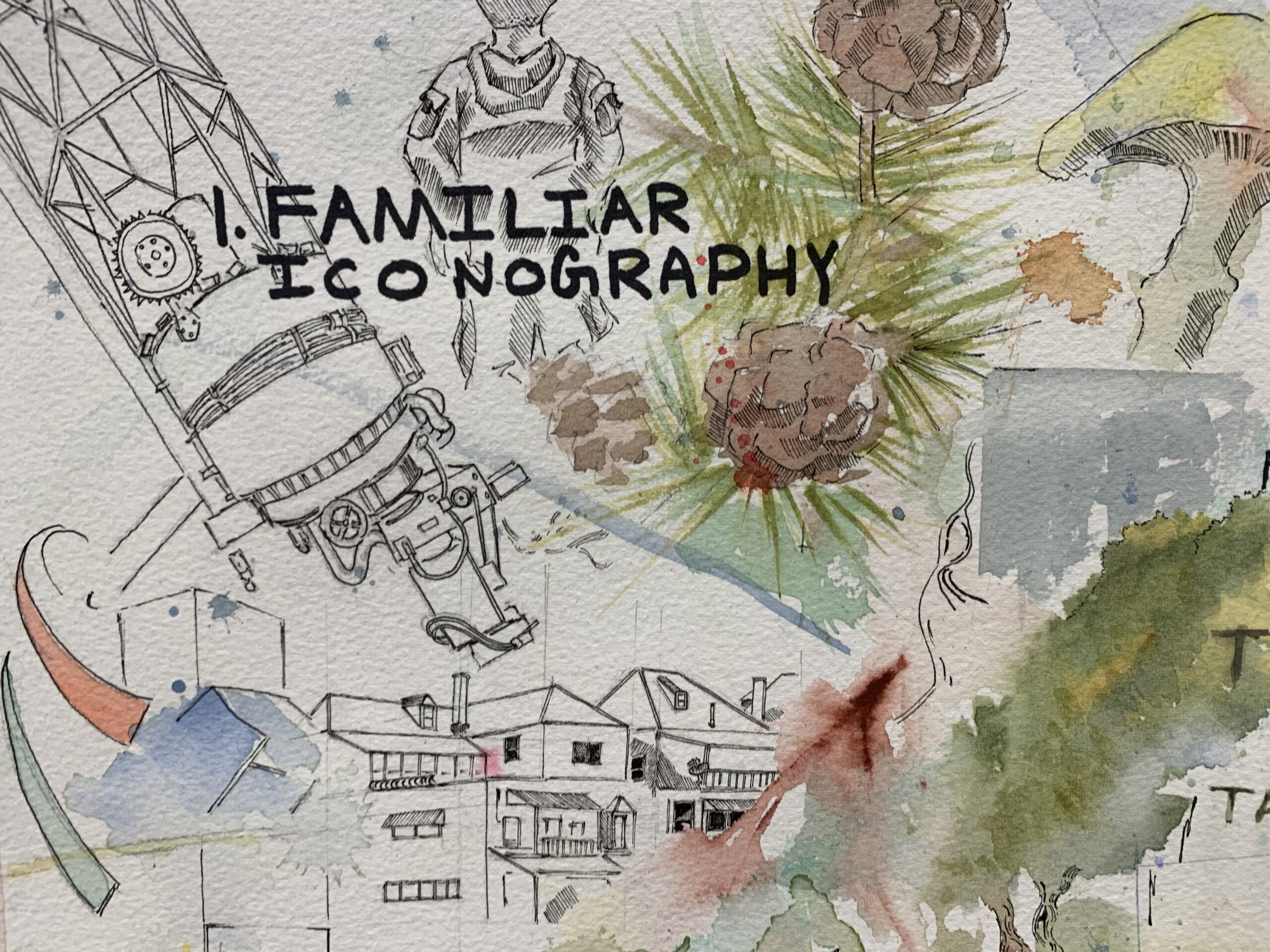
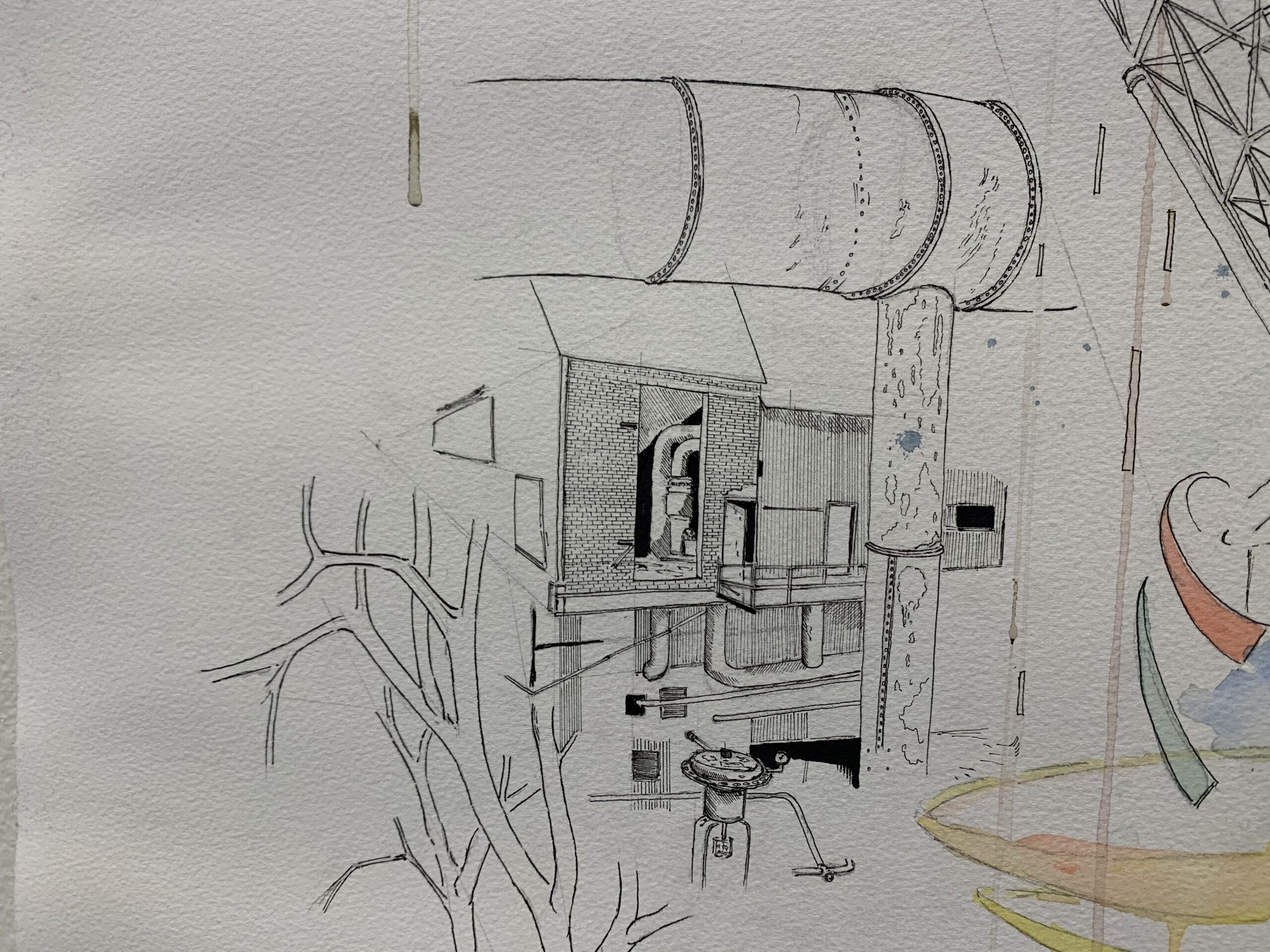
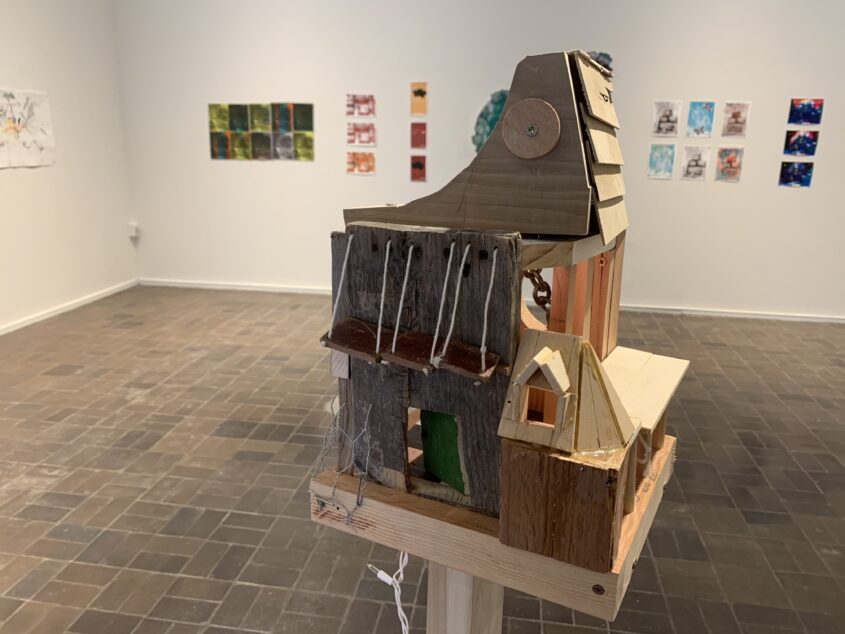
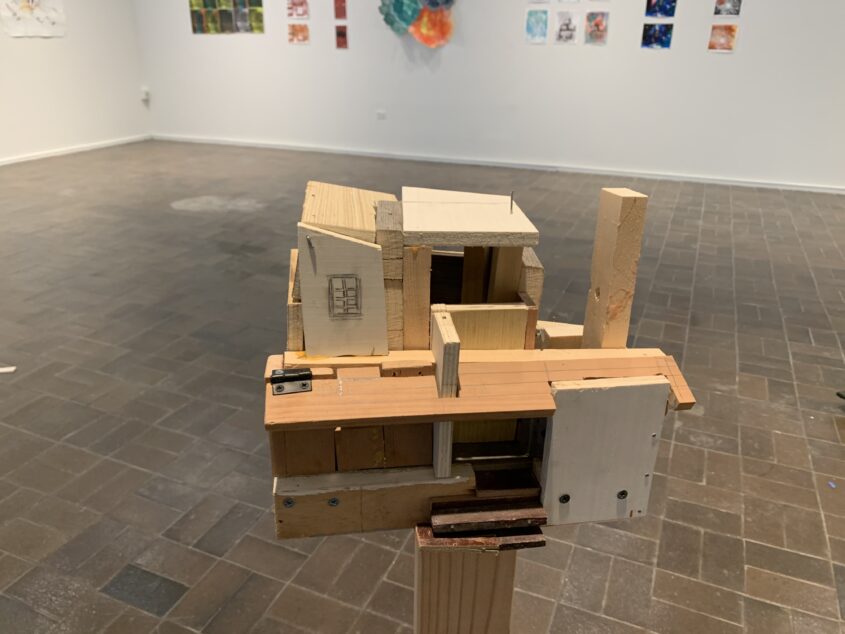
Forceville and Urios-Aparisi frame systems that behave in this way as metaphorical. Any language, for example, provides a system by which we make sense of the world around us, where metaphor is sense making (2009). But, written language is not the only mode through which this sense making occurs. For example, Floris et al. (2011) say that all architectural models are also metaphorical, meaning that they are not significant as the final form in-themselves, rather as a communication of future action and process beyond the work. Floris et al., also note that there is the potential for models to be reduced to instruments, means-to-an-end, in the architectural process. A purely functional view would encourage set-use value and discourage understanding the model for its metaphorical reality. But, the same can happen with any metaphor. In art, the model and the reality it refers to are naturally understood as the same, without inherent regard for whether it is directed to signify something else, instead being the experience-in-itself. As the French philosopher Maurice Merleau-Ponty (2004) writes “painting does not imitate the world but is a world of its own” (p. 107). Since any art takes a variety of experiential and practical liberties in making its depictions, the process shapes the final image in a unique way, and its subjectivity must be realized as inseparable from the object we come to experience. Floris et al. share this sentiment, saying that, pragmatically, any model is made of objects such as foam board, twigs, and cardboard, creating a reality that is distinct from the realism of the thing itself. Likewise, models, rather than representations (or significations), can also be viewed as embodiments of the architectural or artistic processes, as they are a means for creative action, and link material object to idea. This idea also came from Peter Eisenman in 1976, when he voiced, in his article The Ruins of Representation, the potential for unplanned and unexpected directions in architecture that can only result from the creation of the model. Additionally, there are models that exist “only and primarily as models.” Yet, these too have made significant contributions to the “architectural discourse” (Floris et al., 2011, pp. 20-22). Finally, although disciplines such as architecture and art have different motivations for using models, there are also architectural models that play a role in artistic work, which is meant to exist only in the scale and material that it does. This is to say that language, art, and architecture all use models shaped inside experience, never quite able to replicate the initial encounter. Any translation is separated from the nuances of the direct experience to a degree, as both written and visual linguistics are processes of navigation in themselves.
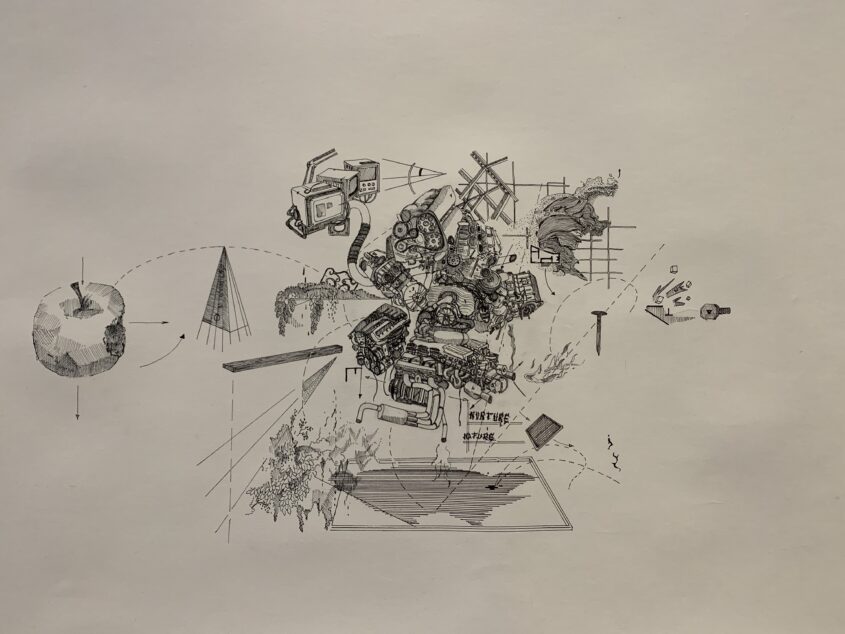
This denial of idealisms and affirmation of practice that is suggested by the metaphor is also voiced by the French playwright and philosopher Jean-Paul Sartre in his work L’Être et le Néant (Being and Nothingness)(Mirvish, 2009). Sartre wrote that to attend to one figure relies on it being distinguished from the presence of others. The significance of any model or symbol is not given in the form itself, but by its surrounding relations. This is reflected, for example, in that when making art, the first mark is always the most difficult to make, since there is relatively less apparent information yet to reference. This is an idea derived from the Gestaltists –the German psychologists who were concerned with the perception of objects. They stated that an object is only recognized as it stands in relation to something else. It is important to note however, that the ability to view this figure against a ground is experienced instead as a whole, rather than understood as its individual components. This means that while the metaphorical value of models or symbols might adhere to the principle that sense-making relies on the potential for action, it takes distinct kinds of reflective tools, such as riddles, to reveal this.
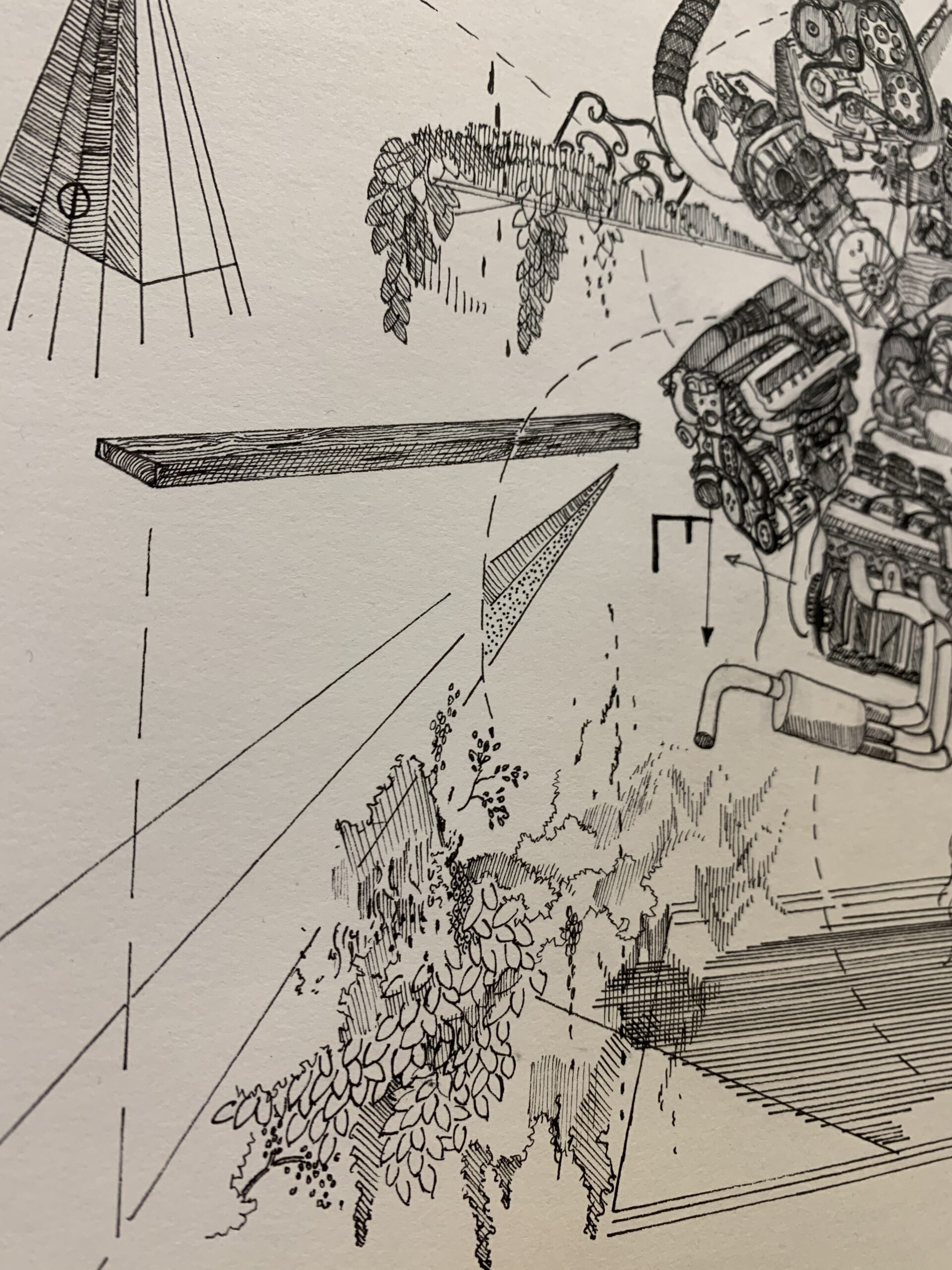
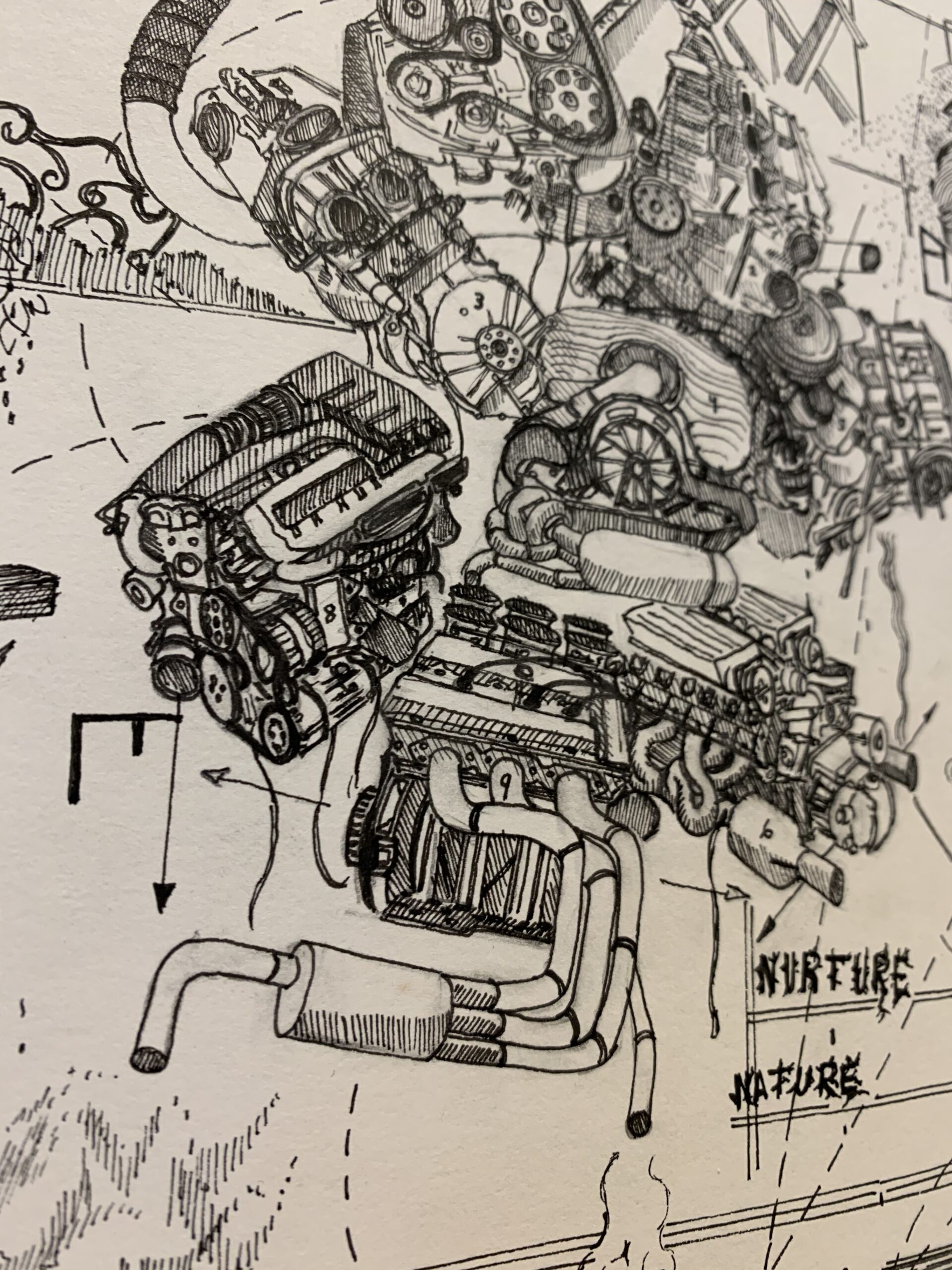
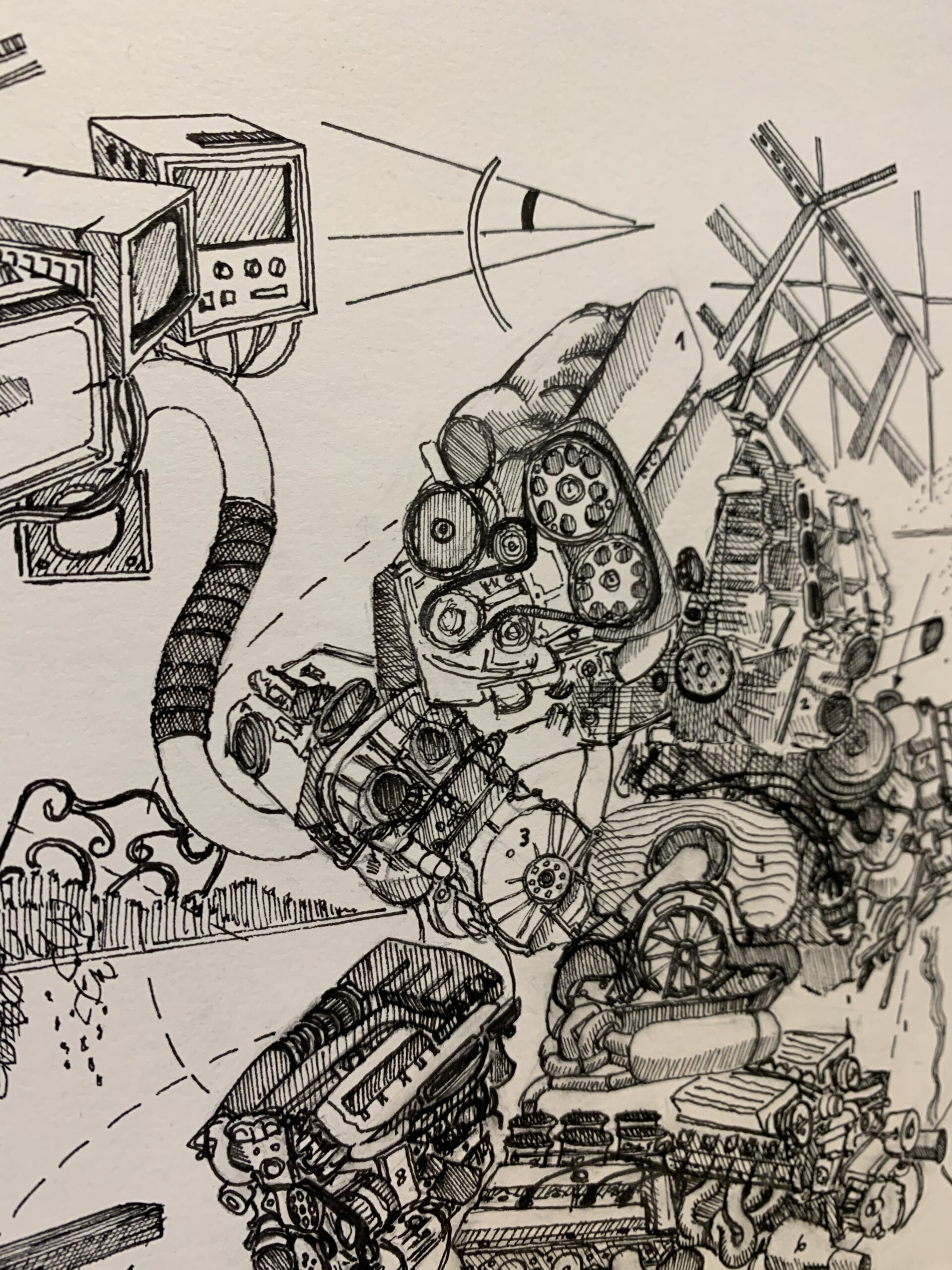
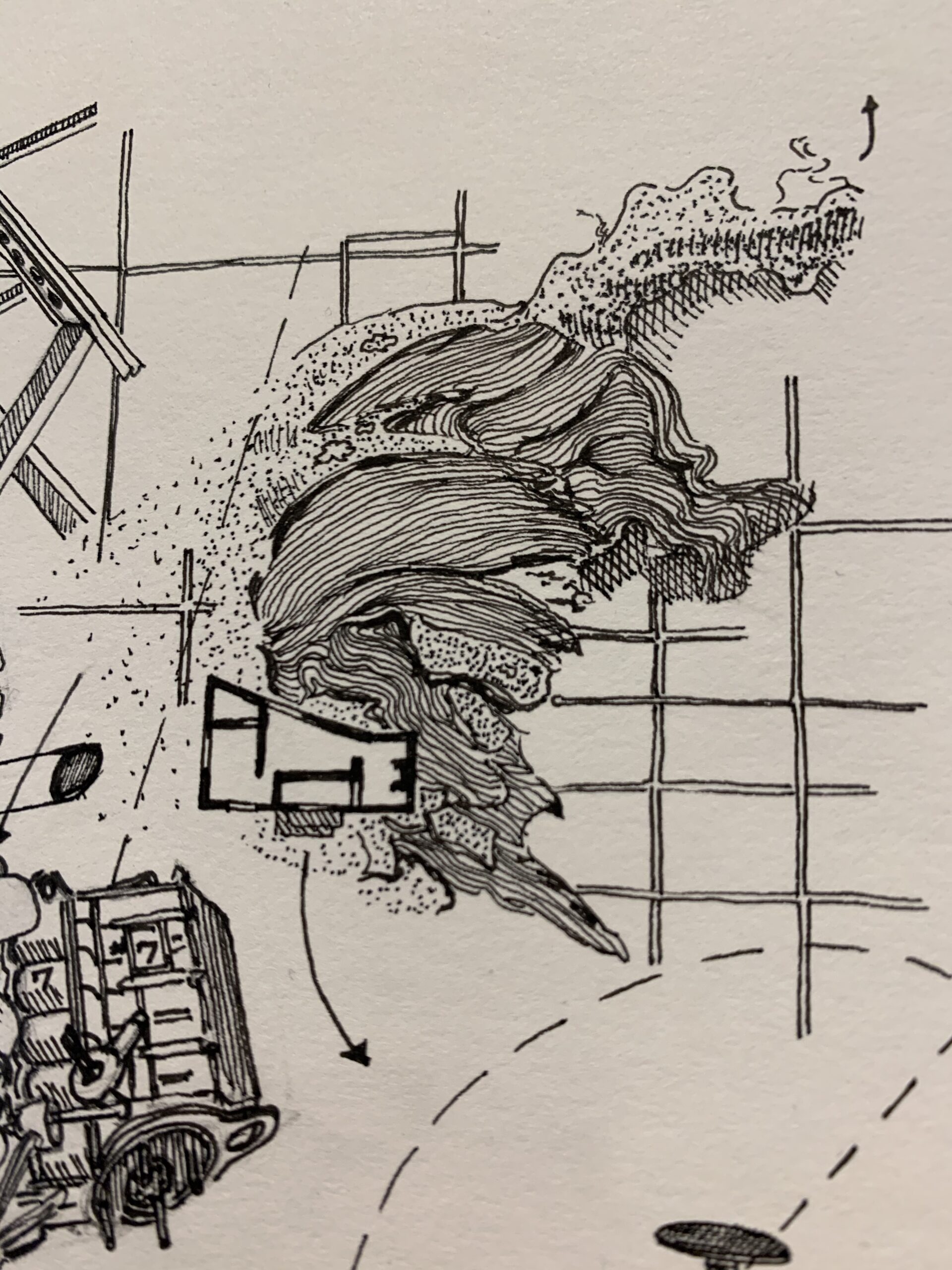
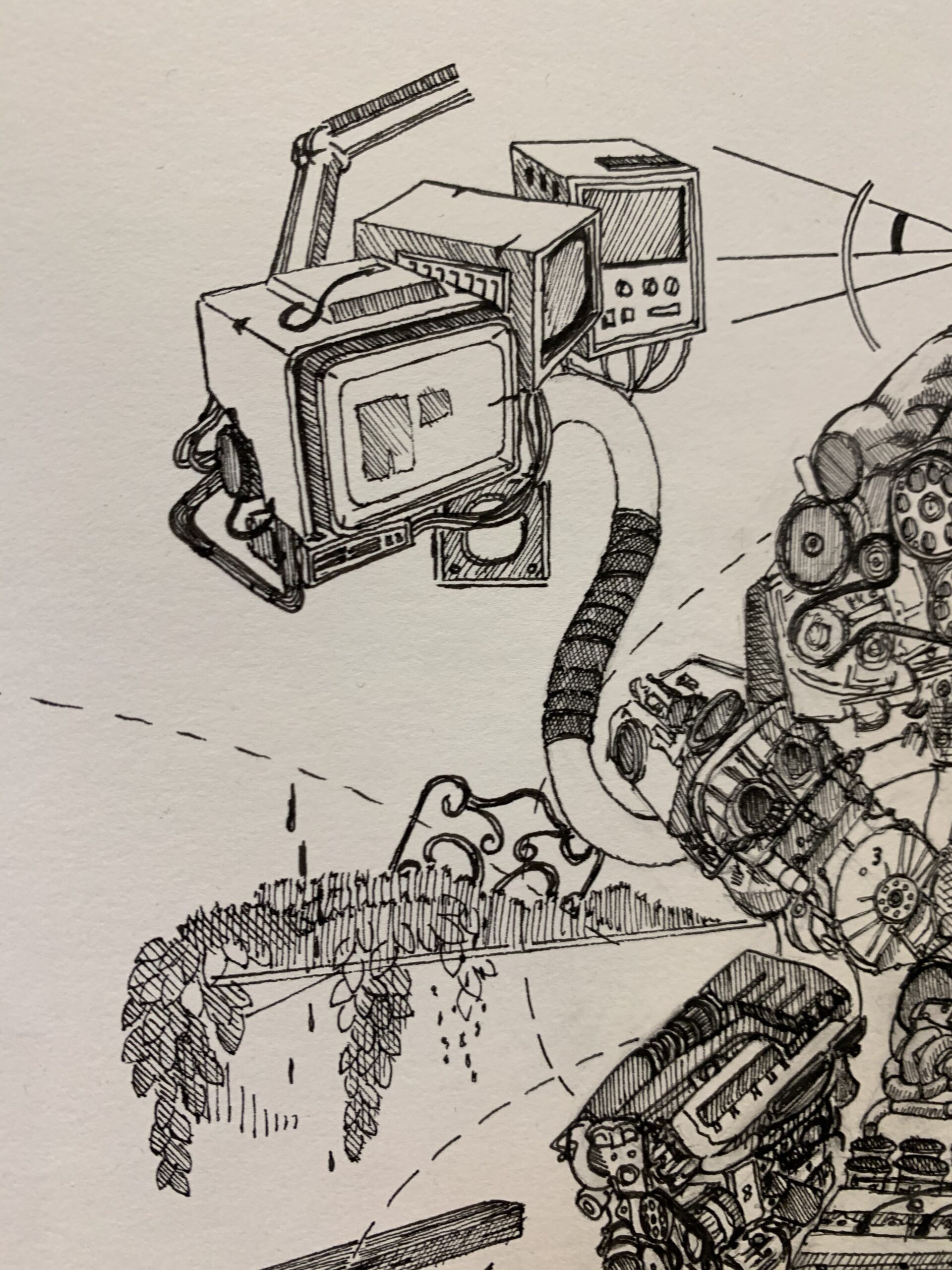
Any riddle functions this way, as the work, while generally literary, must suggest that there is something hidden, but also allow this meaning the ability to remain a secret. The caveat to this is that while a certain knowledge is required to solve a riddle, it cannot be solved by external knowledge, since then it would then not be an “enigmatic,” but a “scientific” question. So, Lewis argues that there must be principles “hidden in plain sight” that allow for it to be solved (Lewis, 2020, pp. 180-181). In art, the use of imagery to reveal alternative significance is a longstanding practice. For example, Botticelli’s Primavera features a dark lush foliage behind several figures of antiquity. While the imagery of the background is understood as foliage by most viewers, a set of human lungs is identifiable in the very same brush strokes. The detection of one signification does not deny the other, and while this dual significance is in plain sight of the viewer, many fail to see its meaning.
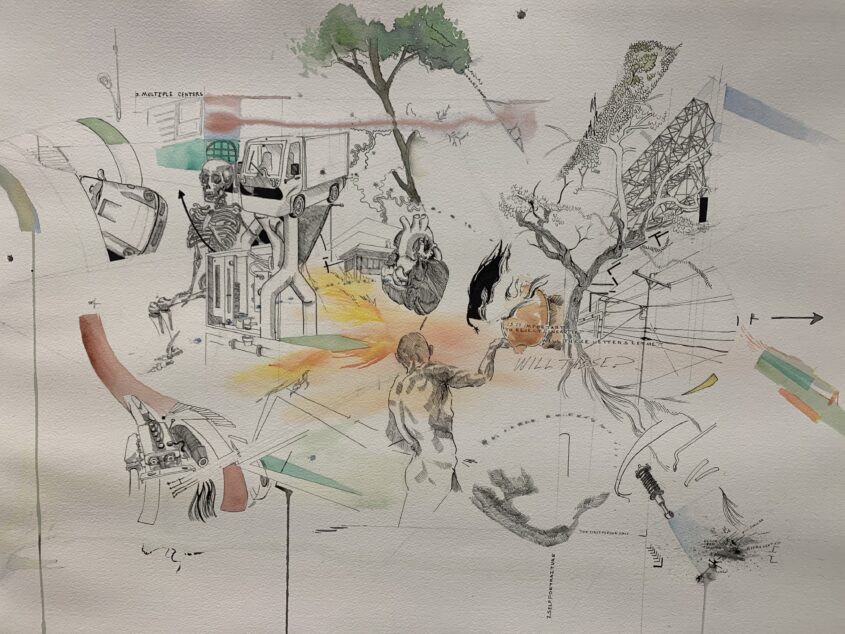
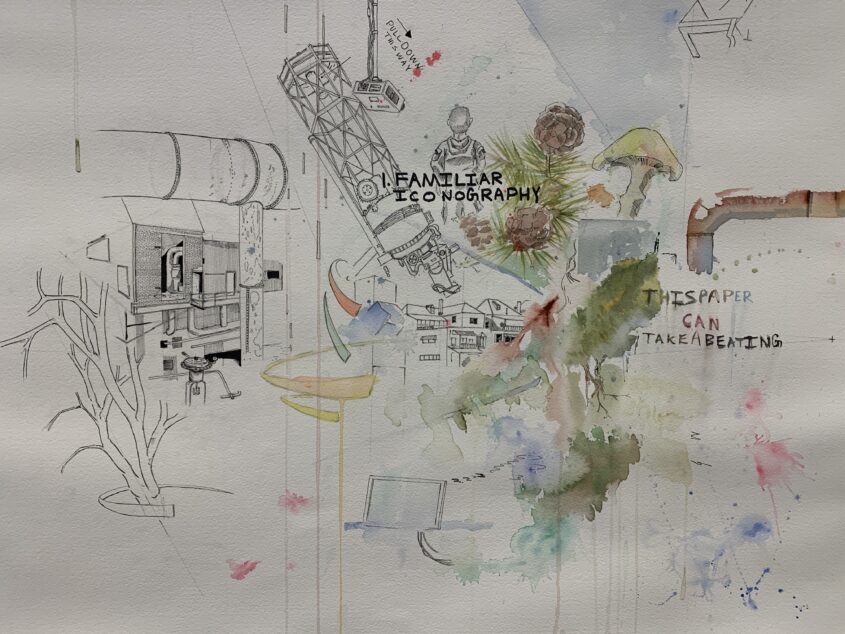
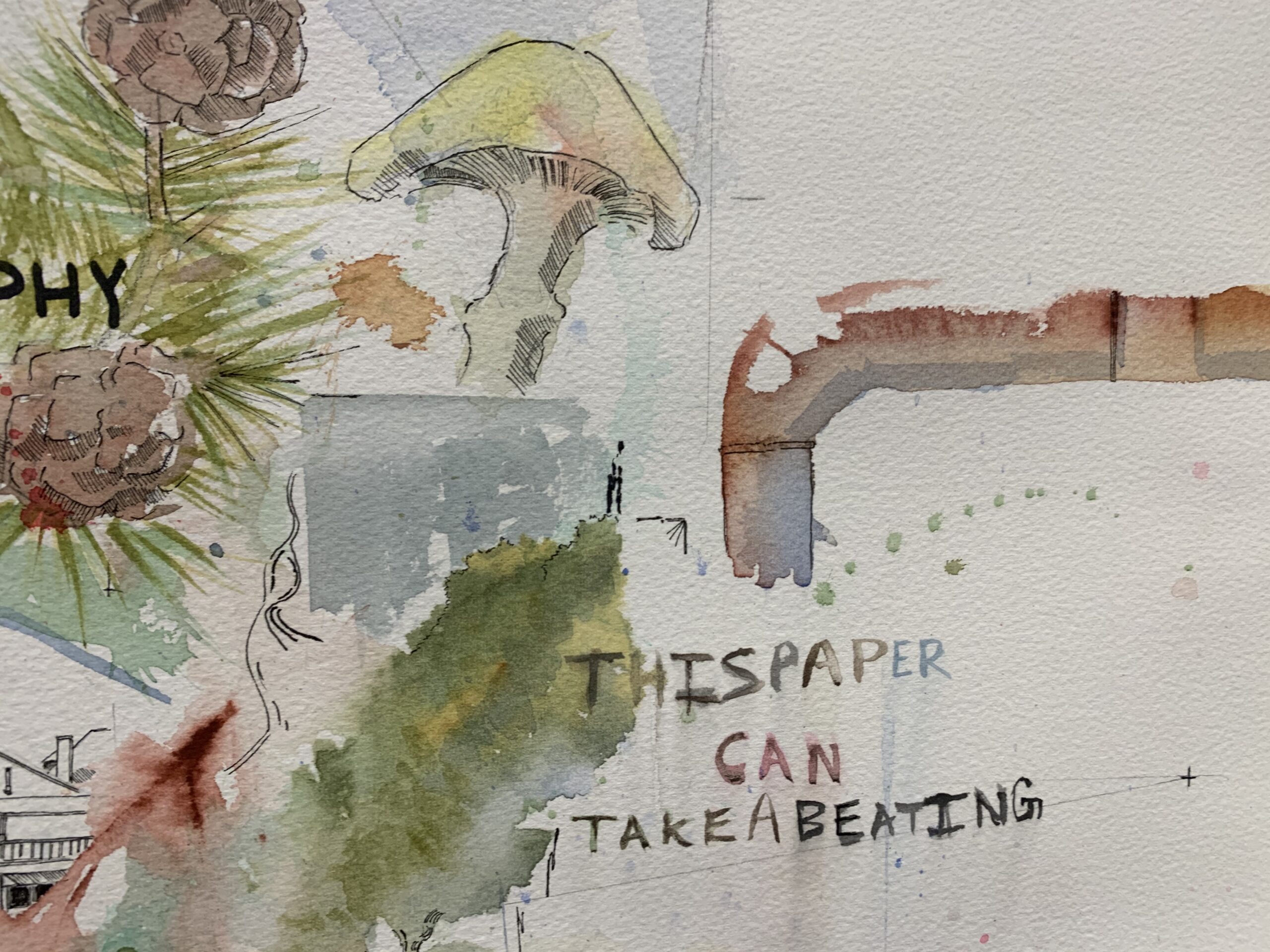
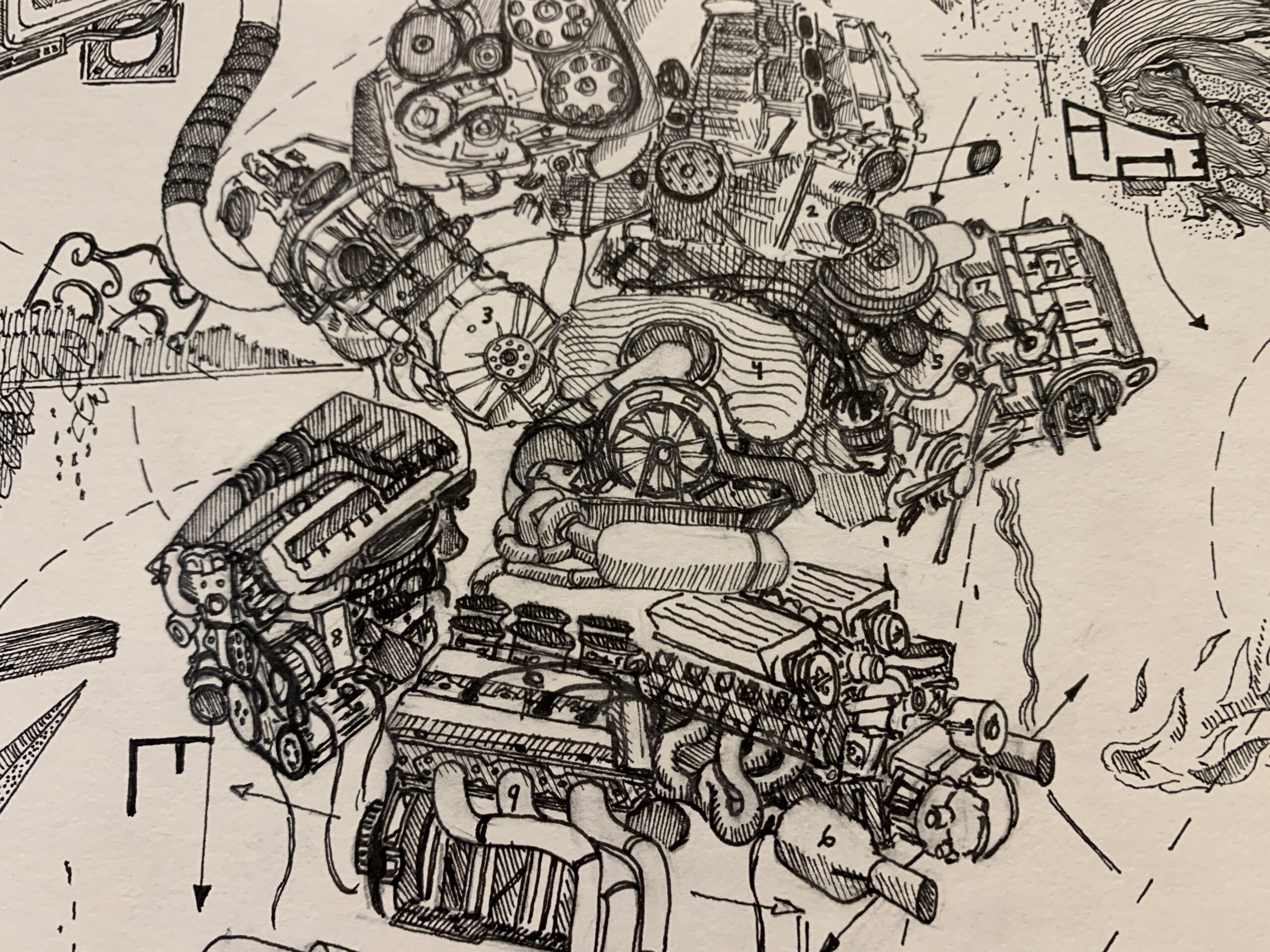
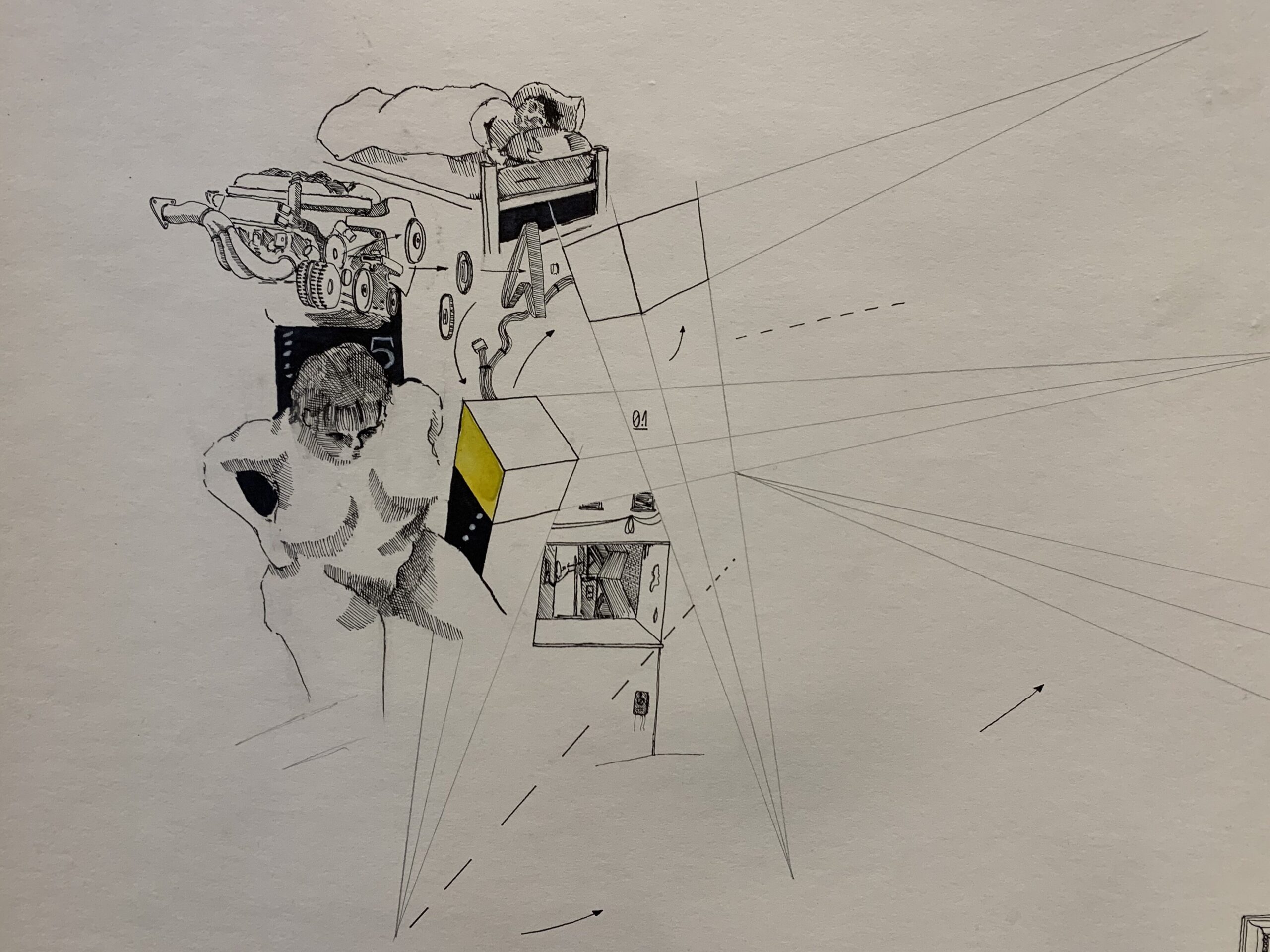
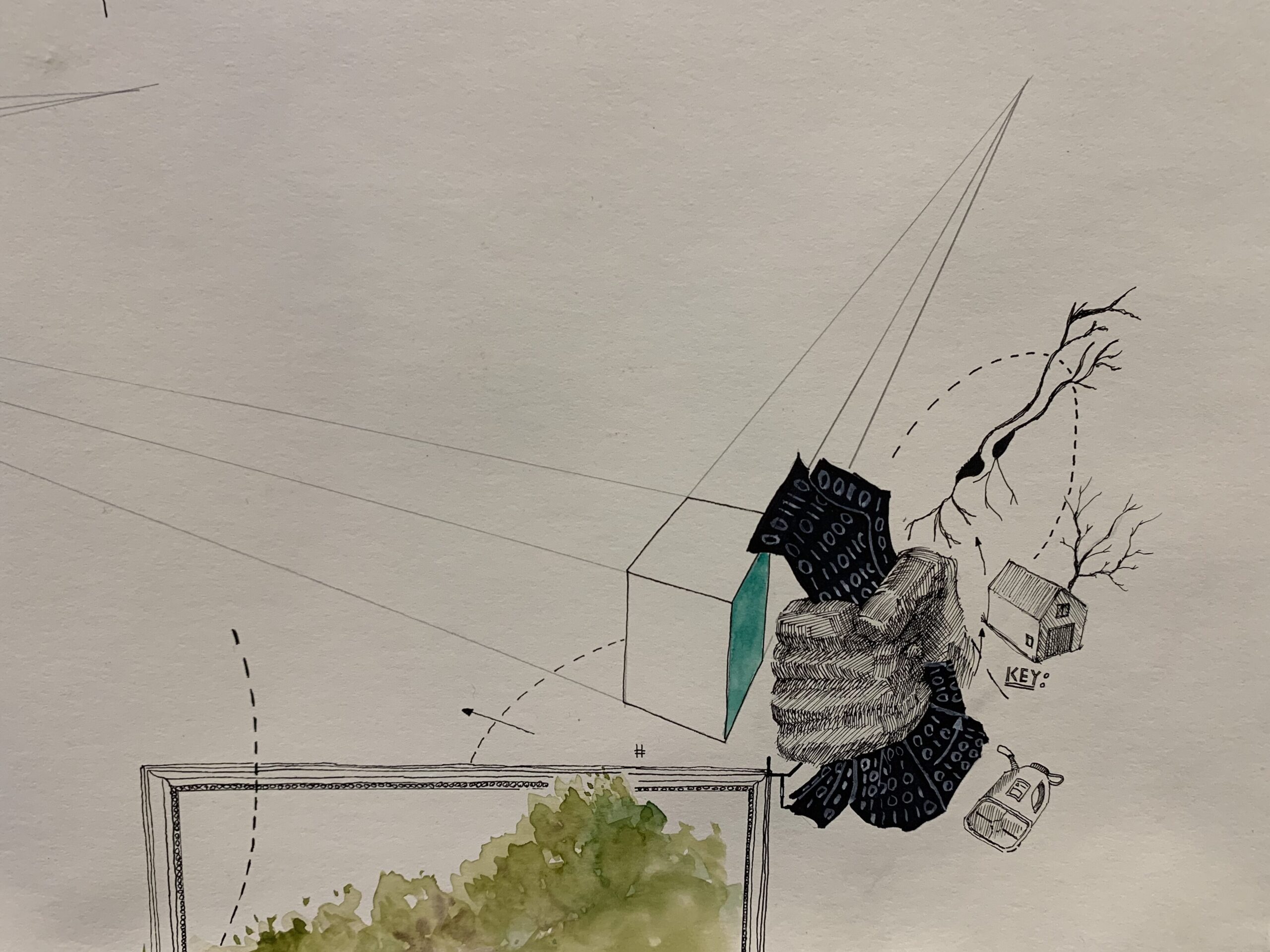
In keeping with Sartre, this kind of art helps show that there must be a threshold value which is detectable for sense-making –distinguishing figure from ground– to occur (Mirvish, 2009). As an example of this concept, a blank canvas hung on a gallery wall is less likely to be detected as a surface to draw on than the same canvas set on an easel in my own studio. Yet, even if its context is changed, the canvas does not lose the physical qualities that solicit its use value. While the languages of nostalgia and logic are both fantasies, they also offer a practical and widely recognizable ground against which figuration of future direction can occur. Recognizable markings such as arrows, dashed lines, letters, symbols, numbers, etc., can be reorganized and scattered to suggest enigmatic meaning and request exploration in a work. Numbers in particular are interesting to me because they are often used for logic based models and open up possibilities for meaning, such as particular orders. This is similar to how the recognizable lines of a coloring book help us to visually elaborate within its open spaces as the lines that are already present limit the potential for further action. Illustration based on logic systems and traditional notions such as linear perspective can be used in the same way. As Sartre says, for motions of navigation to occur, there must be equally recognizable forms by which the former are negated (Mirvish, 2009). Since these kinds of images also represent old notions of artistry as something absolute and unapproachable, by introducing enigmatic composition into these structures, it is possible to make visible their metaphorical realities as a critique of idealism.
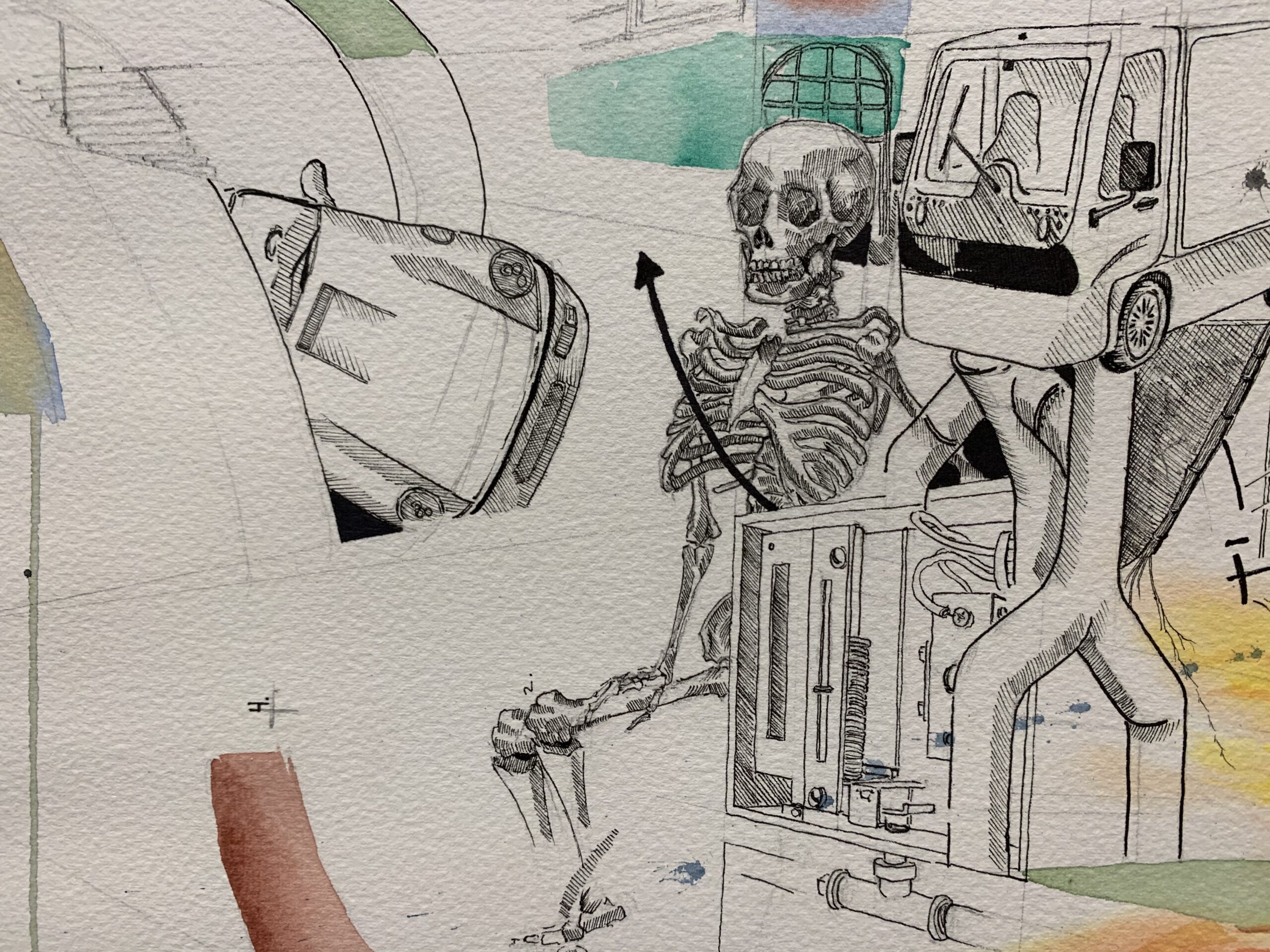
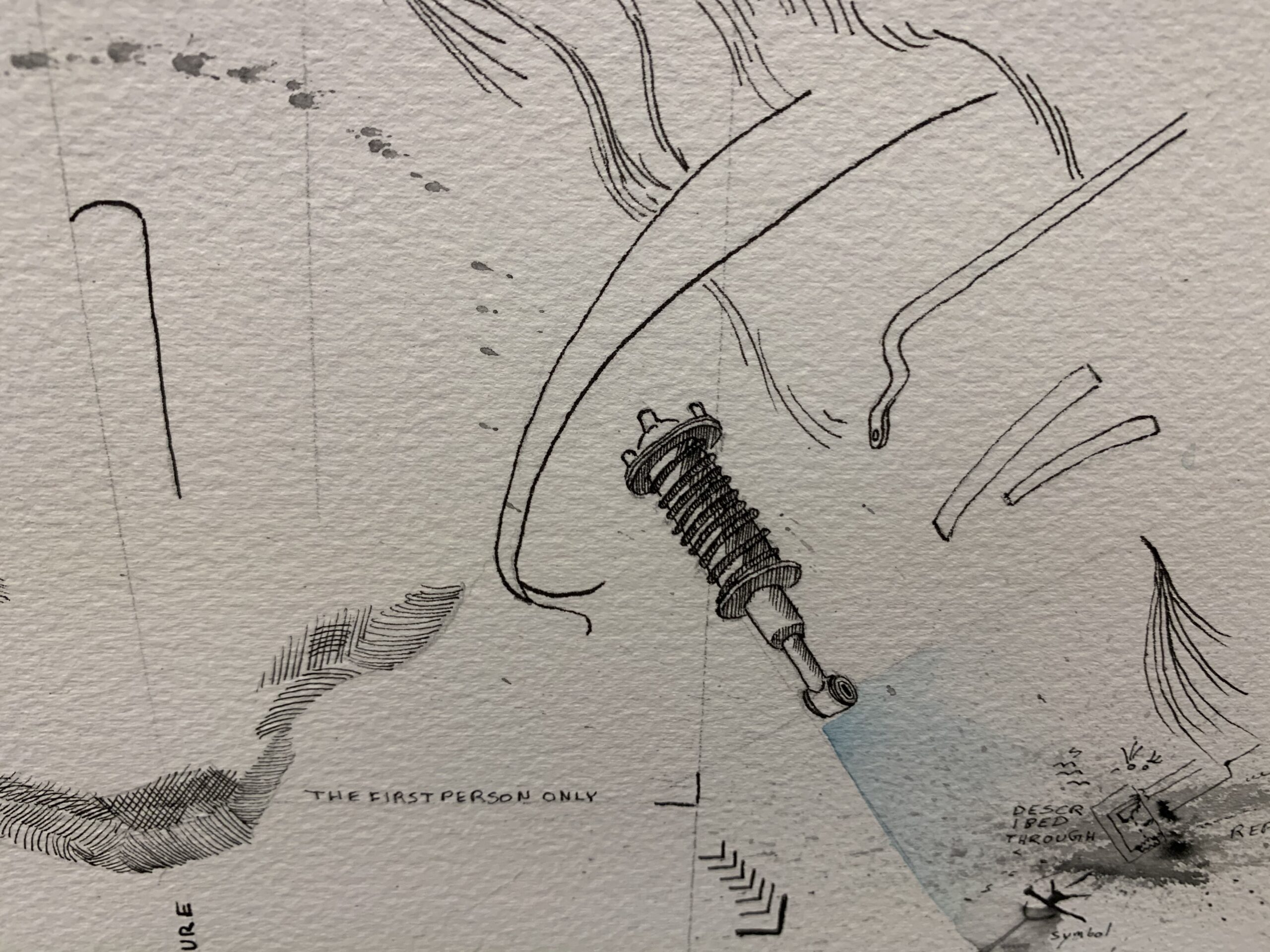
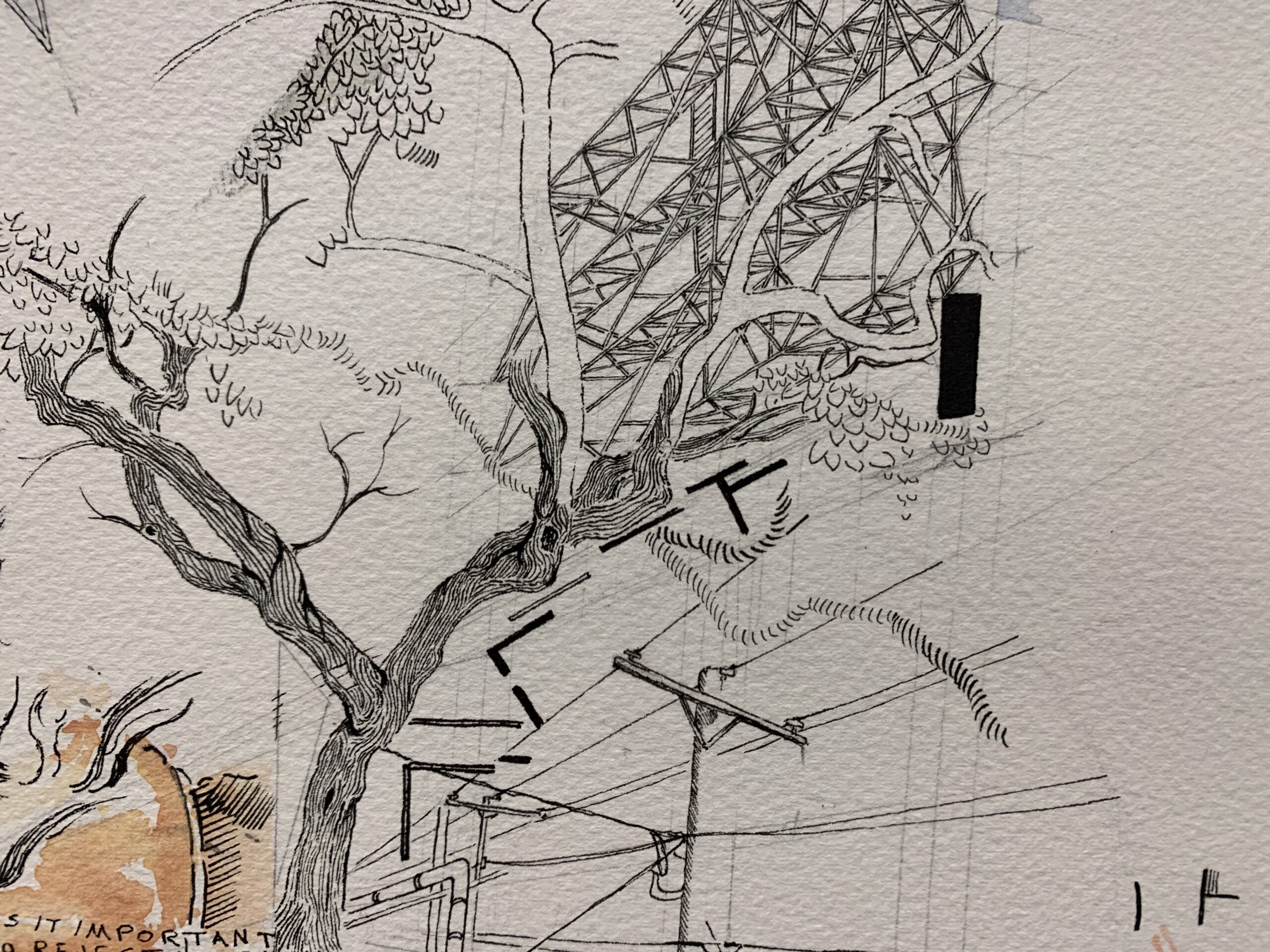
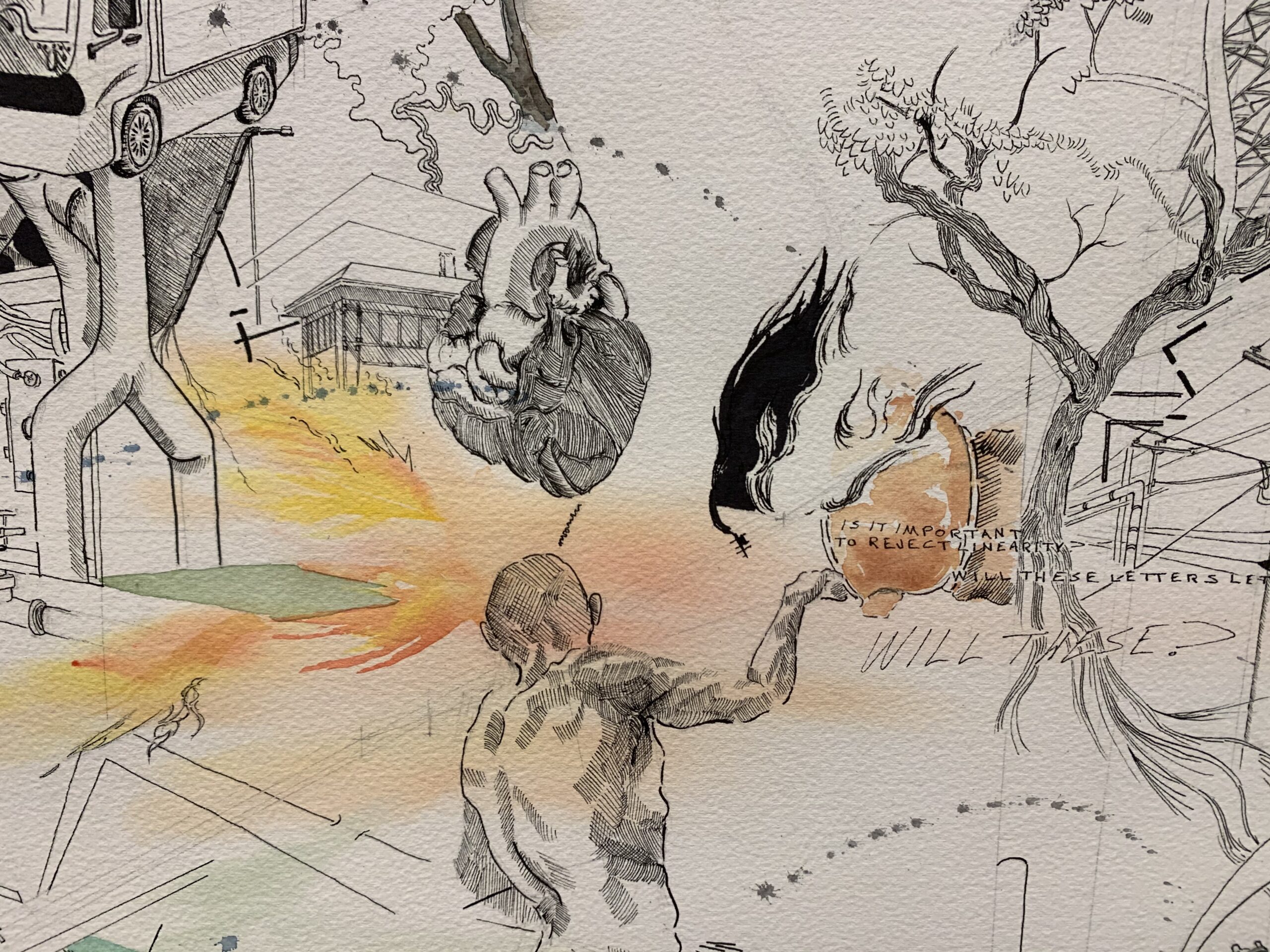
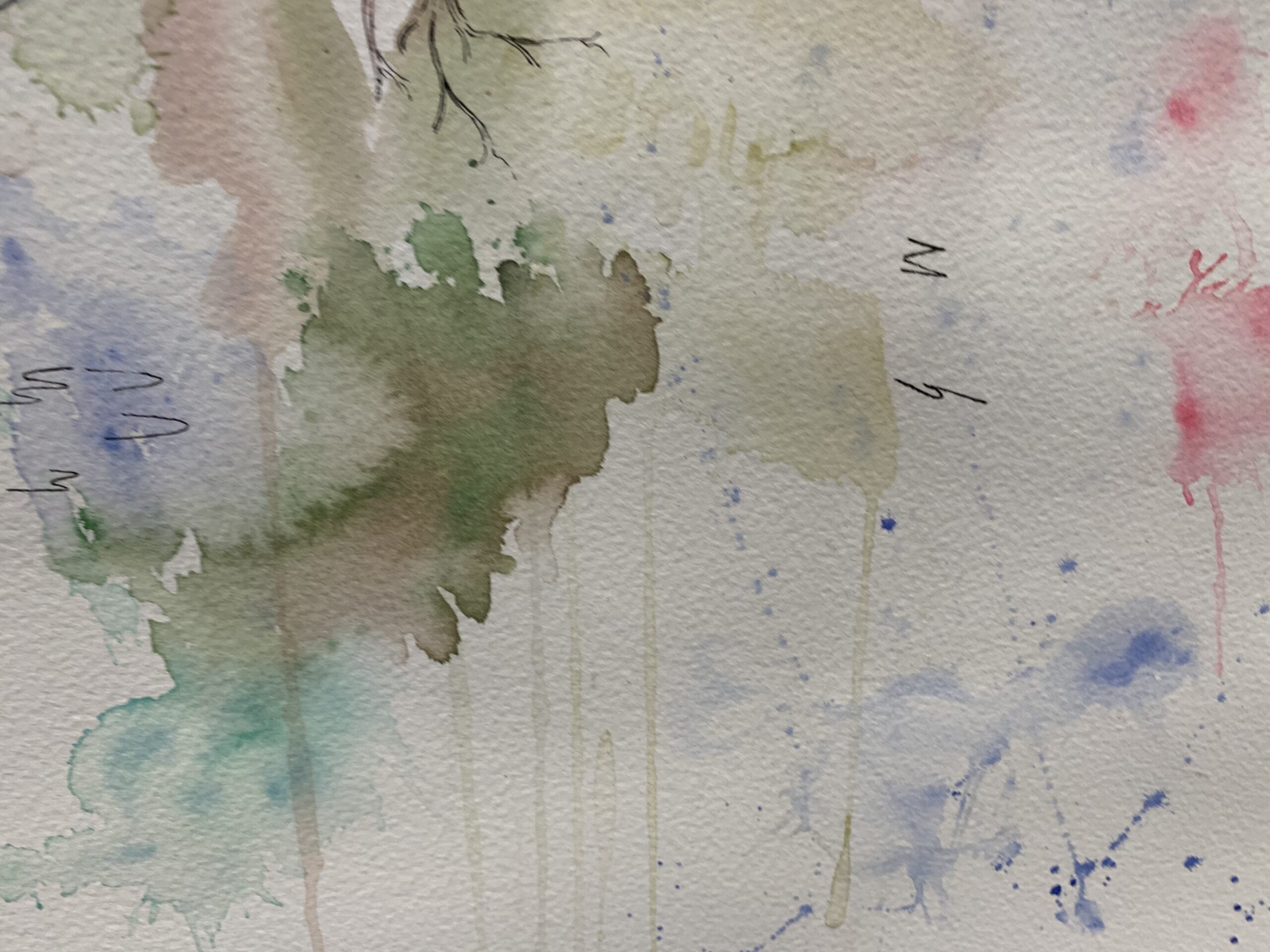
In my work I try to apply this, by making visual moves such as altering perspective, removing the gravity, or altering the scale of objects. Enigmatic composition is revealing not because it is significant in-itself, but because it reveals that there is something left unsolved beyond its previously-viewed-as steadfast significance. To reiterate Sartre, through something’s absence, we equally notice that object’s existence (Sartre, 1956). Allowing for the perceived lack of significance is needed to direct exploration and navigation. A riddle must be recognized by the viewer as containing an unseen meaning in order for them to realize another meaning exists at all. Another way to suggest the need for navigation visually is through embodied actions of making. For example, in my art I use the arched motions my wrists can make to create marks across the page. While not devoid of intent or reference, these abstract engagements might amount in a lack of fetishezation of their marks, or lack of desire for the marks to do anything in particular, and lead viewers to seek meaning in their disarray. Art is difficult to talk about, not because we do not understand it, but because we feel we already do. In part, I want to act against this.
References
Bowley, G. (2015, April 26). Tax break used by investors in flipping art faces scrutiny. The New York Times. https://www.nytimes.com/2015/04/27/arts/design/tax-break-used-by-investors-in-flipping-art-faces-scrutiny.html
Boym, S. (2007). Nostalgia and its discontents. The hedgehog review, 9(2), 7-18.
Floris, J., Holtrop, A., Teerds, H., Princen, B., and De Koning, K. (2011). Models: The idea, the representation and the visionary = Maquettes: Het idee, de verbeelding en het visionaire. Oase, 84. Rotterdam: NAi.
Forceville, C. J., & Urios-Aparisi, E. (Eds.). (2009). Multimodal metaphor. De Gruyter, Inc.
Kraut, R. (2005). Why Does Jazz Matter to Aesthetic Theory? The Journal of Aesthetics and Art Criticism, 63(1), 3–15. http://www.jstor.org/stable/1559135
Lewis., E. T. (2020). Walter Benjamin’s Antifascist Education : From Riddles to Radio. SUNY Press.
Merleau-Ponty, M. (2004). Cézanne’s doubt, T. Baldwin (editor). New York: Routledge. (Original work published 1964 in Sense and Non-sense pp. 9-24).
Mirvish, A. (2009). Sartre and the lived body: Negation, non-positional self-awareness and hodological space. In K. J. Morris (Eds.), Sartre on the body (pp. 67-83). UK: Palgrave Macmillan.
Sartre, J.-P. (1956). Being and Nothingness, (H. Barnes trans.). New York: Philosophical Library.
Steyerl, H. (2011, April). In free fall: A thought experiment on vertical perspective. E-flux journal, (24). https://www.e-flux.com/journal/24/67860/in-free-fall-a-thought-experiment-on-vertical-perspective/
